6 Types of Pet Food: Which is Right for Your Pet?
Explore the types of pet food, their benefits, and how to choose the right one for your pet’s health, nutrition, and lifestyle.
Introduction
Understanding the types of pet food available today can make a big difference in your pet’s overall health. With so many options in the market, pet owners are often confused about what truly works best.
From traditional kibble to modern fresh meals, each option offers unique benefits. Choosing between the different types of pet food depends on your pet’s age, lifestyle, and nutritional needs.
The Importance of Choosing the Right Food for Your Pet
Choosing the right food is one of the most important decisions for your pet’s long-term well-being. It directly impacts energy levels, immunity, and overall health.
Good nutrition plays a key role in disease prevention. A balanced diet supports the immune system and helps reduce the risk of conditions like obesity, diabetes, and heart disease. This is why focusing on Pet Nutrition is essential rather than just picking any available option.
Digestive health is another critical factor. High-quality ingredients improve nutrient absorption and reduce common issues like gas or irregular stools. Over time, this contributes to a healthier gut and better comfort for your pet.
Nutrition also affects skin, coat, and joint health. Essential fatty acids promote a shiny coat, while nutrients like glucosamine help maintain mobility, especially in older pets. Choosing quality pet food ensures these benefits are consistently delivered.
6 Common Types of Pet Food
There are several different types of pet food, each designed to suit specific needs and lifestyles. Understanding these options helps you choose what works best for your pet.
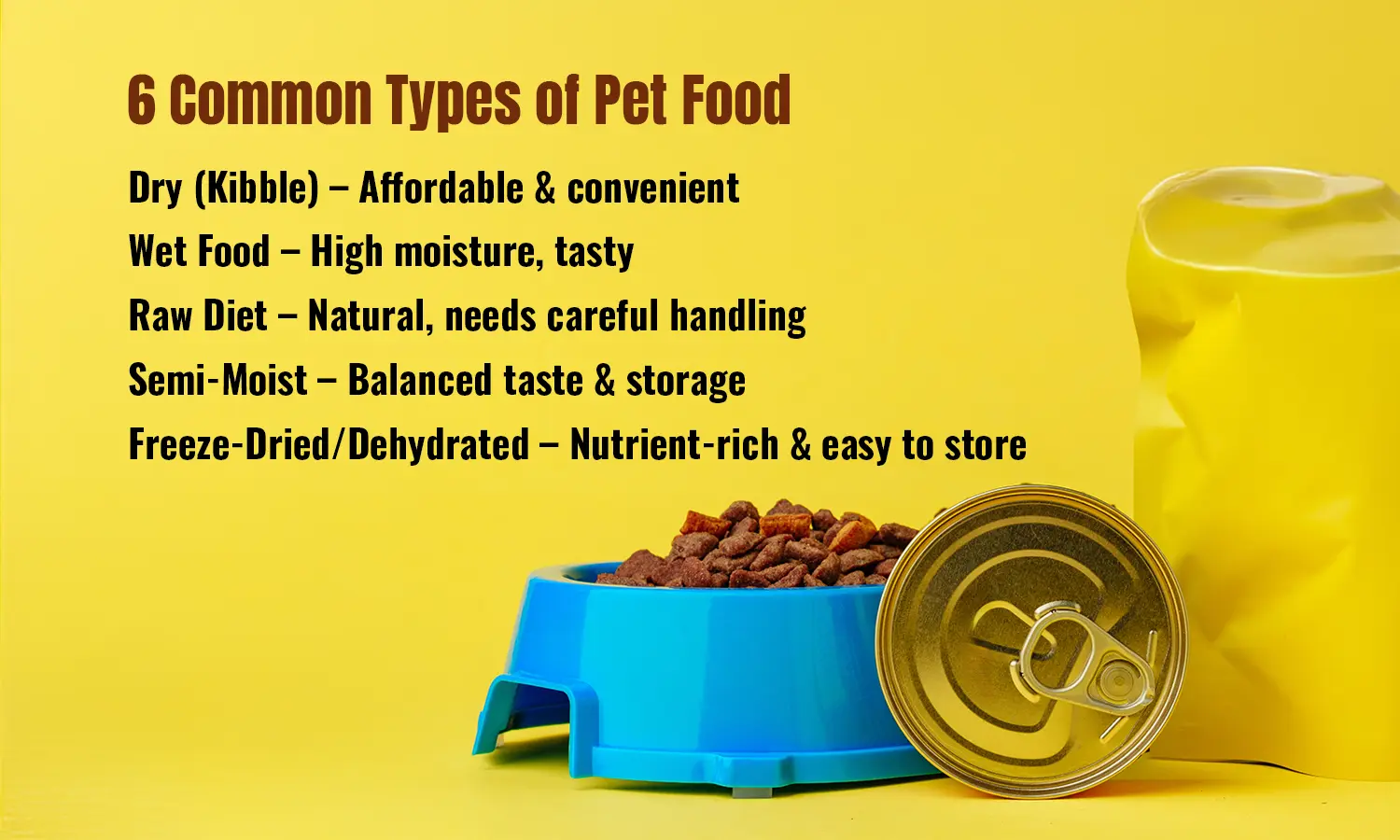
Dry food, commonly known as kibble, is the most widely used option. It is affordable, easy to store, and convenient for daily feeding. Its crunchy texture can also support dental health.
Wet food contains a higher moisture content and is often more appealing to pets due to its aroma and texture. It supports hydration and is especially useful for picky eaters.
Raw diets aim to mimic a pet’s natural eating habits by including uncooked meat, bones, and organs. While some owners prefer this approach, it requires careful handling to avoid contamination.
Semi-moist food sits between dry and wet options, offering better taste than kibble while remaining shelf-stable.
Freeze-dried and dehydrated foods preserve nutrients while making storage easier. These options are becoming increasingly popular among pet owners looking for convenience without compromising nutrition.
Prescription diets are specially formulated to address specific health conditions and are usually recommended by veterinarians.
With evolving trends in Pet Food India, pet owners now have access to a wider variety of options than ever before.
Common Mistakes Pet Owners Make When Choosing Pet Food
Even with good intentions, many pet owners make mistakes while selecting food. One of the most common is relying on marketing terms like “premium” or “natural” without checking the actual nutritional value.
Another mistake is ignoring ingredient lists. The quality of protein sources and the balance of nutrients matter more than attractive packaging.
Many owners also switch foods too quickly, which can lead to digestive issues. Gradual transitions are always recommended.
Unbalanced homemade dog food is another concern. While home cooking may seem healthier, it often lacks essential nutrients unless properly planned.
Choosing healthy pet food should always involve understanding ingredients, nutritional balance, and your pet’s specific needs.
How to Choose the Best Food for Your Pet
Selecting the right food requires a practical and informed approach. Start by identifying your pet’s life stage, as nutritional needs vary between puppies, adults, and senior pets.
Reading labels is essential. Look for foods that are complete and balanced, with clearly mentioned protein sources. Avoid unnecessary fillers and artificial additives whenever possible.
Convenience also plays a role. Today, many pet owners prefer online pet food platforms for easy access to trusted options. Reliable services offering pet food delivery make it easier to maintain consistency in feeding routines.
For those looking for fresher options, fresh pet food is gaining popularity due to its minimal processing and better digestibility. Many platforms now provide fresh food delivery, making it easier to include such meals in your pet’s diet.
Ultimately, the goal is to choose food that supports your pet’s health, energy, and long-term well-being.
Conclusion
Understanding the types of pet food available helps you make more confident decisions as a pet owner. Each option has its own advantages, and the right choice depends on your pet’s individual needs.
As feeding habits evolve, more pet owners are prioritising quality, convenience, and nutrition. Whether you choose traditional options or explore modern alternatives, selecting the right food ensures your pet stays healthy and active.
FAQs
1. Is Fresh Pet Food Really Better Than Dry Food?
Fresh pet food can be easier to digest and more nutrient-rich, but both options can be healthy if they are balanced and high quality.
2. Is It Best To Feed Pets Fresh Food?
It depends on your pet’s needs. Fresh food can be beneficial, but it should be nutritionally complete and suited to your pet’s lifestyle.
3. Can You Give Oats To Pets?
Yes, oats can be given in moderation as they are a good source of fibre and nutrients for pets.
Ready to switch to fresh, vet-approved meals?
Wagg N Dine cooks human-grade dog food fresh every day and delivers it to your door.
Explore Fresh Meals →