Can Dogs Eat Tomatoes, Nuts, and Pork? The Risk Foods Indian Pet Parents Get Wrong
Are tomatoes, nuts, or pork safe for your dog? Get the precise Indian guide to risky foods and discover healthy, fresh-cooked alternatives for a safer diet.
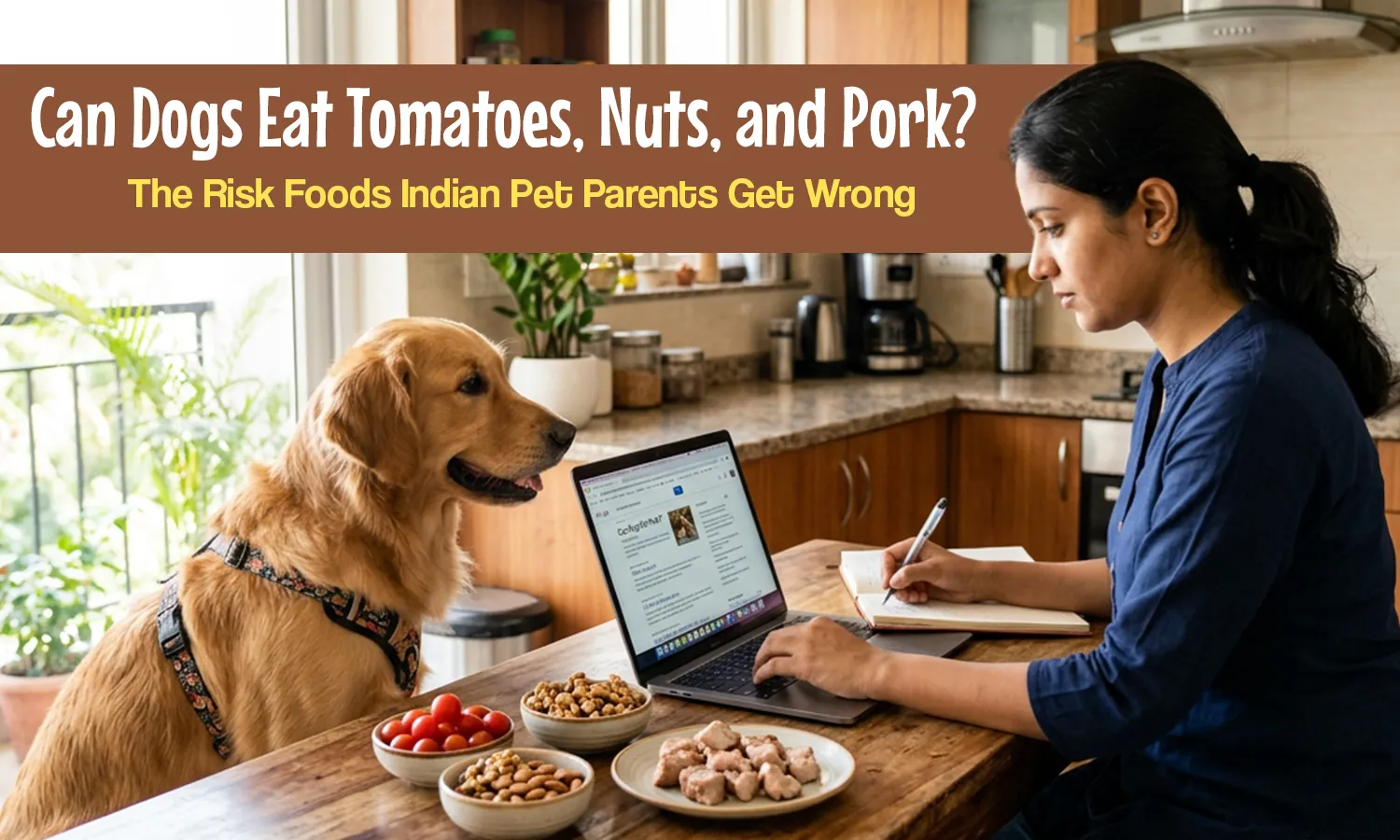
If asked, can dogs eat tomatoes, nuts or porl,some foods land in a grey zone: not outright toxic, but riskier than the average safe-food list suggests. Tomatoes, nuts, and pork are three of the most commonly mis-handled examples in Indian dog parenting. The honest answers require nuance: ripe tomatoes are mostly fine but green ones are dangerous, certain nuts are safe and certain ones are toxic, and pork is fine when properly cooked but problematic when raw or seasoned. This guide gives you precise, vet-aligned answers and explains why anchoring your dog's diet in quality fresh dog food makes managing these grey-zone foods far simpler.
Can Dogs Have Tomatoes?
Ripe red tomatoes, in moderation, are safe for most dogs. The flesh of a ripe tomato contains lycopene, vitamin C, vitamin A, and potassium. A few small pieces of ripe tomato as an occasional treat is fine for a healthy adult dog.
The danger zone is the unripe green tomato and the leaves and stems of the tomato plant. These contain solanine and tomatine, glycoalkaloid compounds that are mildly toxic to dogs and can cause gastrointestinal upset, lethargy, weakness, and in larger doses, more serious symptoms. Solanine concentrations drop sharply as tomatoes ripen, which is why ripe red tomatoes are safe and unripe green ones are not.
The practical guidance: if you are giving a tomato as a treat, use only fully ripe red flesh, in small portions. Avoid tomato-based human foods that contain onion, garlic, salt, or sugar which is most of them. Pasta sauce, ketchup, and cooked tomato chutney are off-limits regardless of whether the tomatoes themselves were ripe.
Can Dogs Eat Nuts? The Specifics Matter
Nuts are the most common grey-zone food where the answer depends entirely on the specific nut. Several nuts are safe in small amounts. Several are dangerous. A few are acutely toxic. Pet parents who treat nuts as a single category make the most mistakes.
Macadamia nuts are toxic to dogs. Even small amounts can cause weakness, vomiting, hyperthermia, and tremors. Walnuts, particularly black walnuts and mouldy walnuts, can be neurotoxic. Almonds are not acutely toxic but are difficult for dogs to digest and can cause gastrointestinal upset and choking risk. Pistachios contain aflatoxins when stored poorly and are high-fat. Cashews are generally safe in small amounts. Peanuts (technically legumes) are generally safe,see the previous article on peanut butter.
The simple rule: most nuts are not worth the risk-management. Almonds, cashews, and peanuts are tolerable in small amounts; macadamia and walnut are off-limits; everything else is best avoided. Salted, flavoured, and chocolate-covered nuts are categorically off-limits regardless of the underlying nut.
Can Dogs Eat Pork?
Pork is fine for dogs when properly cooked. Pork muscle meat is a good protein source and is nutritionally similar to chicken or mutton. The cautions are around preparation, not the meat itself.
Raw or undercooked pork carries a real risk of trichinosis,a parasitic infection that can affect dogs as well as humans. Pork must be cooked to safe temperatures throughout. Bacon, ham, sausages, and other processed pork products are loaded with salt, preservatives, and sometimes spices like onion and garlic,all of which make them unsuitable for dogs even when the underlying pork would be fine.
Cooked pork bones, like all cooked bones, must never be given. They splinter dangerously. If you are sharing cooked pork from your kitchen, give plain cooked muscle meat in small portions, with no seasoning, sauce, or bone.
Why Fresh Dog Food Simplifies the Grey Zone
When your dog's main diet is quality fresh dog food, the risk-management around grey-zone foods becomes much simpler. The bowl provides complete nutrition. Treats from your kitchen become occasional pleasures, not nutritional necessities. You are not under pressure to find creative ways to bulk up the diet, which is when accidental poisonings often occur with pet parents while they add human food to make up for a kibble they sense is inadequate.
A fresh dog food meal plan removes that pressure entirely. The dog is well-fed. The treats are pleasure, not supplement. The grey-zone foods can be approached with leisure yes to a few cubes of ripe tomato, no to macadamia nuts, properly-cooked plain pork in small portions. No anxiety, no overcompensation.
What to Do If Your Dog Eats Something Risky
If your dog eats macadamia nuts, walnuts, raw pork, large quantities of green tomato, or any toxic food, contact your veterinarian immediately. Note the time, the food, and the approximate quantity. Do not induce vomiting unless instructed by a veterinarian some toxins cause more damage on the way back up. For ingestions of clearly toxic substances (chocolate, xylitol, grapes, raisins, onions in large amounts), the same applies call the vet first, before doing anything else.
Most accidental ingestions of grey-zone foods produce, at worst, mild gastrointestinal upset. Watch for vomiting, diarrhoea, lethargy, weakness, or behavioural changes over the next 24 hours. If symptoms appear or escalate, the vet visit becomes urgent.
Building Smart Habits
The simple framework: anchor your dog's nutrition in fresh dog food, learn the absolute toxic list (chocolate, grapes, xylitol, macadamia, onion, raw bread dough), treat the grey-zone foods with the precise nuance they deserve, and never assume that human food is automatically safe just because it is on your plate. Indian household cooking, with its routine use of onion, garlic, chilli, and salt, is largely incompatible with dog feeding regardless of the underlying ingredients.
The cleanest approach is the one that aligns with how Indian families already eat: make the dog's meals separately, properly, and use kitchen treats as small, deliberate pleasures rather than as substitutes for nutrition.
Sidestep the Risk With a Reliable Bowl
When your dog's main diet is sorted, the grey-zone food question becomes academic. Wagg N Dine's fresh dog food subscription gives you a vet-formulated, human-grade base, and you can enjoy the occasional tomato cube or properly-cooked pork bite without worrying about the bigger picture. Sign up and get your dog onto food that earns its place every day.
Here are five relevant, search-friendly FAQs based on the new blog. Each response is under two lines and naturally includes the focus keyword:
Q1: Can dogs eat tomatoes if they are cooked into a curry or sauce?
A: No, even though can dogs eat tomatoes safely when ripe and plain, Indian curries or sauces contain dangerous ingredients like onions, garlic, and heavy spices.
Q2: Can dogs eat tomatoes that are still green and unripe?
A: Absolutely not; while can dogs eat ripe tomatoes, green ones contain toxic solanine which causes severe stomach upset and weakness.
Q3: What should I do if my dog accidentally eats tomato leaves or stems?
A: Monitor them closely and call a vet; if you wonder can dogs eat tomatoes parts like stems, they are toxic and cause lethargy or gastrointestinal distress.
Q4: Can dogs eat tomatoes as a daily replacement for fresh vegetables?
A: No, while can dogs eat tomatoes as a rare treat, they should never replace balanced vegetables found in a proper fresh food diet.
Q5: Is the red flesh safe when asking can dogs eat tomatoes?
A: Yes, the fully ripe red flesh is safe in small, occasional quantities because it is low in toxins and rich in antioxidants.
Ready to switch to fresh, vet-approved meals?
Wagg N Dine cooks human-grade dog food fresh every day and delivers it to your door.
Explore Fresh Meals →