Diabetic Dog Food: Why Fresh Meals Are the Best Choice for Diabetic Dogs
Diabetic dog food must control blood sugar, deliver consistent nutrition, and remove processed carbs. Here’s why fresh dog food meets all clinical requirement.
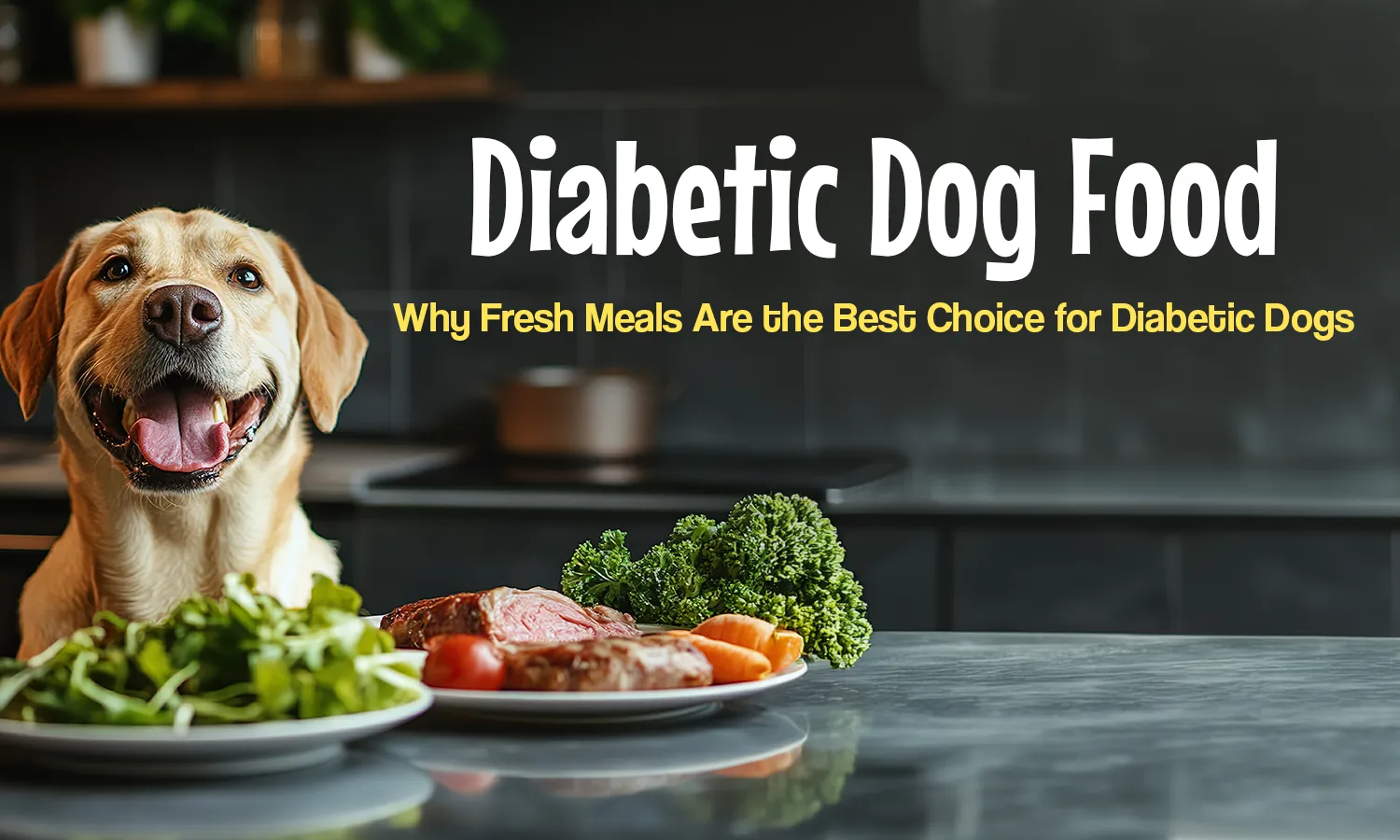
Canine diabetes mellitus is more common in India than most pet parents realise, particularly among older dogs, female dogs, and certain predisposed breeds including Beagles, Cocker Spaniels, and the Indian Pomeranian. The good news: diabetic dogs can live full, comfortable lives when nutrition is managed properly. The diet that does this best is rarely commercial diabetic kibble. It is a fresh diabetic dog food, formulated for stable blood sugar, low-glycaemic carbohydrates, and predictable mealtime macros.
Understanding Canine Diabetes
Most canine diabetes is Type 1, an autoimmune destruction of the pancreas's insulin-producing beta cells, requiring lifelong insulin therapy. Diet's role in management is twofold. First, to keep mealtime blood glucose spikes manageable so the prescribed insulin dose actually stabilises. Second, to maintain healthy weight and metabolic function over the long term.
The single biggest dietary villain for diabetic dogs is rapid carbohydrate. Kibble, even diabetic kibble is built on a starch matrix that holds the pellets together. That starch breaks down quickly into glucose post-meal, creating exactly the blood sugar volatility that diabetic management is trying to avoid.
Why Fresh Dog Food Outperforms Commercial Diabetic Diets
A properly formulated fresh dog food meal for a diabetic dog typically contains 35-45% protein, 40-50% low-glycaemic vegetables, 10-15% slow-burn carbohydrate (brown rice or sweet potato), and a controlled fat percentage. This composition produces a slow, predictable post-meal glucose rise exactly what is needed for stable insulin response.
Commercial diabetic kibble, even from premium brands, struggles to achieve this profile because the manufacturing process requires substantial starch content. Fresh dog food has no such constraint. The carbohydrate fraction can be adjusted precisely to the dog's tolerance, and individual dogs can be monitored and tuned over time.
Building a Diabetic Dog Food Plan
Working with your veterinarian, the targets for a diabetic dog food plan are usually: high protein for satiety and lean tissue maintenance, moderate fibre for slowed glucose absorption, low-glycaemic vegetables, and minimal simple carbohydrates. A typical fresh dog food plan for a diabetic dog might include lean chicken or fish, generous portions of pumpkin and green beans, a small portion of brown rice or barley, and supplemental omega-3.
Crucially, meal timing must be consistent. Insulin is dosed against meals; meals must arrive on a predictable schedule. Fresh dog food subscription delivery, with portion-sized packs, makes this easier than any other feeding model. The same meal, at the same time, every day.
Foods to Avoid in Diabetic Dogs
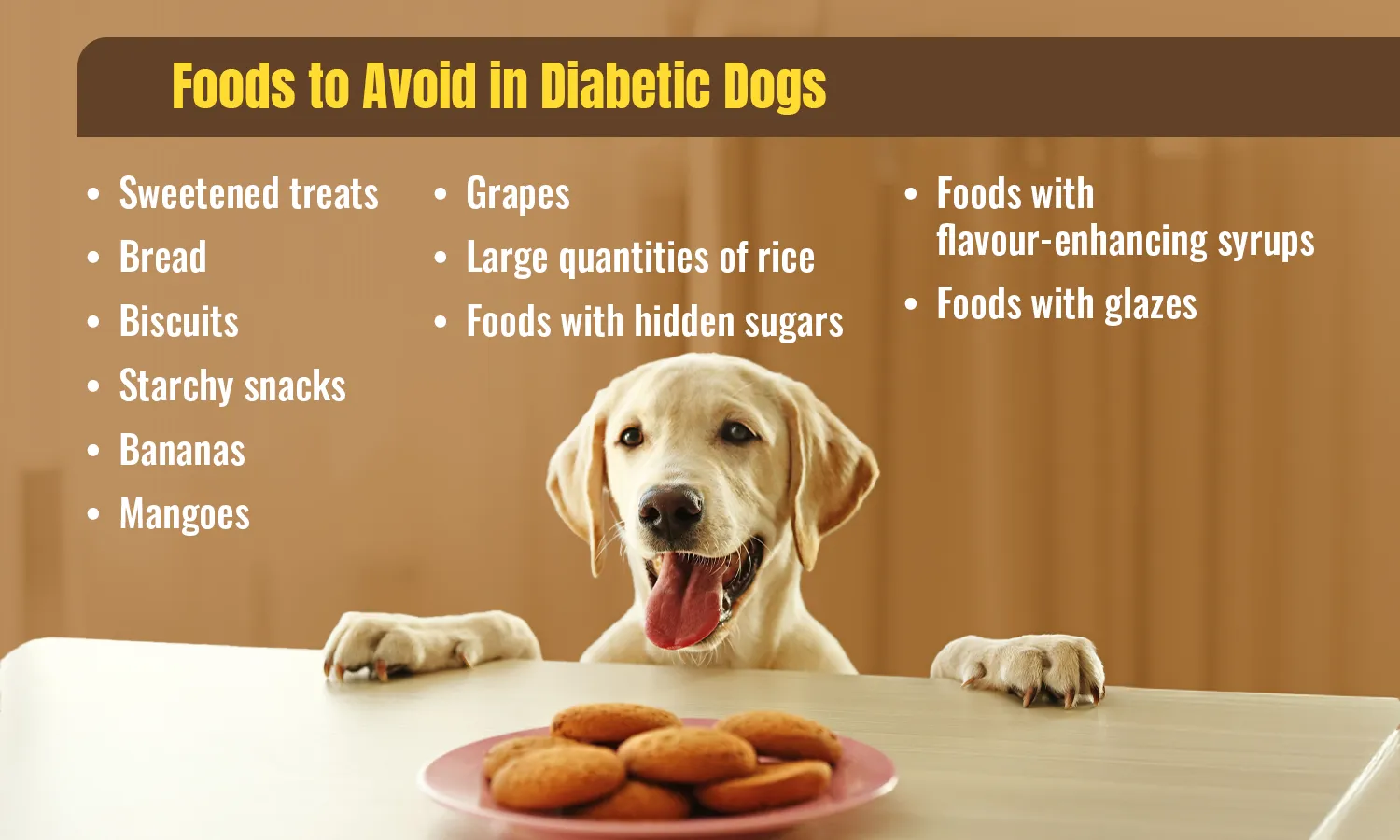
Several foods that are otherwise fine for healthy dogs are problematic for diabetic dogs. Sweetened treats, even in small amounts, are off the table. Bread, biscuits, and starchy snacks are not Diabetic Dog Foods and should be avoided. Fruit treats, common in non-diabetic Indian households, must be limited; bananas, mangoes, and grapes (the latter being toxic regardless) all spike glucose. Even rice, in large quantities, can be excessive.
The simplification that fresh dog food brings is exactly right for diabetic management. The bowl contains what is meant to be there, and nothing else. There are no hidden sugars, no flavour-enhancing syrups, no glazes, all of which appear routinely in commercial pet food.
Monitoring and Adjustment
A diabetic dog on fresh dog food should have regular glucose curves done by the veterinarian during the stabilisation phase. The diet can then be tuned slightly more or less carbohydrate, slightly more or less fibre based on actual response. This level of adjustment is impossible with kibble, where the formulation is fixed by the manufacturer.
Wagg N Dine works with veterinary input on diabetic plans, with adjustable carbohydrate and fibre percentages on every meal pack. As your dog's diabetic management evolves, the meal plan evolves with it.
What Pet Parents Typically Observe
Pet parents who switch a diabetic dog to fresh dog food typically observe more stable insulin requirements within the first month, fewer hypoglycaemic episodes, fewer hyperglycaemic spikes, more predictable glucose curves. Weight management also improves, as the protein-rich, vegetable-heavy fresh dog food creates satiety without empty calories. Energy levels and coat quality, often diminished in poorly-controlled diabetic dogs, recover visibly.
Coordinating With Your Vet
A switch to fresh dog food in a diabetic dog should be coordinated with the veterinarian, since insulin doses may need recalibration. The transition should be gradual over ten to fourteen days with glucose monitoring through the changeover. Most veterinarians, once they see the data, become enthusiastic supporters of fresh dog food for diabetic management.
A Stable Plan for a Diabetic Dog
If your dog has been diagnosed with diabetes, Wagg N Dine's vet-aligned fresh dog food plans can support stable, manageable blood sugar with consistent meal timing and predictable macros. Speak with us about a diabetic-specific subscription and let us help your dog live well with the condition.
Frequently Asked Questions
1. Why is fresh food considered the best diabetic dog food for blood sugar control?
Unlike starchy kibble, fresh diabetic dog food uses low-glycemic ingredients that prevent dangerous post-meal glucose spikes and ensure a stable insulin response.
2. Can diabetic dog food help my pet lose weight safely?
Yes, high-protein and fibre-rich diabetic dog food promotes satiety and lean muscle maintenance, which is critical for managing insulin resistance in overweight dogs.
3. What ingredients should I look for in a clinical diabetic dog food?
The best diabetic dog food contains lean proteins like chicken or fish paired with slow-burn carbohydrates and fibre-dense vegetables like pumpkin and green beans.
4. Is it safe to switch my dog’s diabetic dog food without a vet?
You should always consult your vet when changing to a new diabetic dog food, as a more efficient fresh diet may require a recalibration of your dog's insulin dosage.
5. How does a fresh dog food subscription simplify diabetic management?
A diabetic dog food subscription provides pre-portioned meals with fixed macros, ensuring your dog gets consistent nutrition and timing, which are vital for daily insulin dosing.
Ready to switch to fresh, vet-approved meals?
Wagg N Dine cooks human-grade dog food fresh every day and delivers it to your door.
Explore Fresh Meals →