Dog Anatomy 101: How Many Teeth Do Dogs Have, Dog Paw Care, and What Pet Parents Should Know
How many teeth do dogs have? How should you care for dog paws? A practical anatomy guide for Indian pet parents and how fresh dog food supports physical health.

Most pet parents could not, on the spot, answer two simple questions: how many teeth do dogs have, and what is the structure of a dog paw? These are not trivia. Understanding basic canine anatomy makes you a more attentive pet parent,quicker to spot dental issues before they become expensive, more confident in identifying paw injuries, and better equipped to ask the right questions at the vet. This guide covers what every Indian pet parent should know about dog teeth and dog paws, alongside how a fresh dog food diet supports both.
How Many Teeth Do Dogs Have?
Adult dogs have 42 permanent teeth,20 in the upper jaw and 22 in the lower jaw. This is more than humans, who have 32. The dog's teeth break down into four categories. Twelve incisors at the front (six top, six bottom) are used for nibbling and grooming. Four canines (two top, two bottom) are the long, sharp teeth used for grasping. Sixteen premolars (eight top, eight bottom) sit behind the canines and shear food. Ten molars (four top, six bottom) at the back grind food.
Puppies have 28 deciduous (baby) teeth, which begin appearing at three to four weeks of age and are usually fully present by six to eight weeks. Adult teeth start replacing them around four months and the full adult set is in place by six to seven months. The phase of teething from about three to seven months, is when puppies chew anything they can fit in their mouths, which is normal and managed with appropriate chew toys.
Dental Health in Indian Dogs
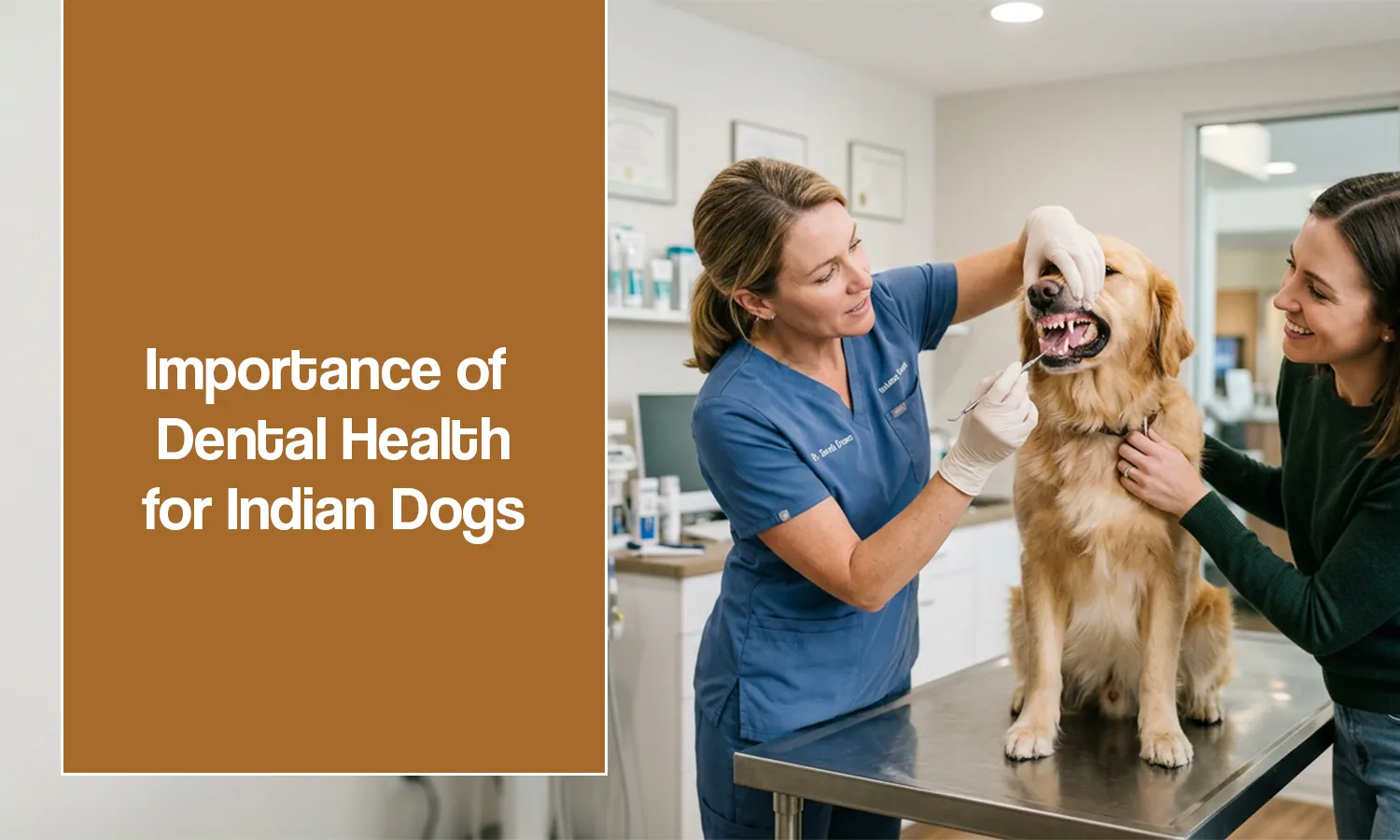
Dental disease is the single most underdiagnosed health issue in Indian pet dogs. By age three, most dogs without proactive dental care have some degree of periodontal disease gum inflammation, plaque buildup, tartar which over time leads to tooth loss, chronic pain, and bacterial spread to the heart, kidneys, and liver. The smell of a dog's breath is the most accessible early warning. Healthy dog breath is mild and slightly meaty; foul breath signals dental disease.
Diet plays a meaningful role in dental health. The myth that kibble cleans teeth has been largely discredited extruded kibble shatters on first contact with teeth and provides no abrasive cleaning effect. Fresh dog food, contrary to assumptions, does not coat teeth with sugars or starches in the way many commercial diets and treats do. The lower carbohydrate content and absence of synthetic sweeteners reduces the substrate available for plaque-forming bacteria.
Active dental care daily or near-daily brushing with a dog-specific toothbrush and toothpaste, dental chews of appropriate hardness, and annual dental cleanings under anaesthesia at the vet,is the gold standard. A fresh dog fooddiet contributes by not adding to the problem; it does not, on its own, replace brushing.
Understanding the Dog Paw
The dog paw is more sophisticated than it looks. Each paw has four weight-bearing toes plus a fifth digit (the dewclaw) higher up on the leg. Each toe has a digital pad, the four small fleshy pads, and the entire paw rests on a metacarpal pad (the larger central pad). A small carpal pad sits higher up the leg, used for braking and traction during quick stops.
The paw pads are made of thick, fatty, fibrous tissue that protects bones and joints from impact. The pads are also thermally insulating, which is why dogs can walk on cold ground that would be uncomfortable for humans. They are not, however, indestructible and Indian summer pavements regularly reach temperatures hot enough to cause serious paw burns.
Dog Paw Care for Indian Conditions

Indian pet parents face specific paw-care challenges. Hot pavements in summer are the biggest. The general rule: if you cannot comfortably hold the back of your hand on the pavement for seven seconds, it is too hot for your dog's paws. Walk early morning or after sunset during the summer months. Watch for paw redness, blistering, or licking, all signs of burn injury.
Monsoon brings the opposite problem: constantly wet paws lead to fungal infections, particularly between the toes. Dry paws thoroughly after rainy walks. Watch for excessive licking or chewing, which often signals interdigital infection. Salt and chemical residues from urban roads can irritate paws year-round; a quick rinse after walks helps.
Routine paw maintenance includes nail trimming every three to four weeks for most dogs (less for active dogs whose nails wear naturally), checking pads for cracks or foreign objects after every walk, and watching for limping or favouring of a particular paw. The dewclaw, if present, also needs regular trimming because it does not contact the ground and grows unchecked.
How Fresh Dog Food Supports Anatomical Health
Diet's contribution to dental and paw health is indirect but real. A diet of fresh dog food, low in synthetic sugars and starches, reduces the bacterial load that drives periodontal disease. The omega-3 content of fresh dog food, particularly meals using fish supports skin and pad health, reducing the dryness and cracking that affect paw pads in dry, cold months.
More broadly, the protein quality and bioavailability of fresh dog food supports overall musculoskeletal health. Strong jaws need quality protein. Healthy paws need adequate fatty acids, biotin, and zinc, all present in higher quality and bioavailability in fresh dog food than in kibble. Wagg N Dine's recipes are formulated with these systemic considerations in mind, not just calorie and macronutrient targets.
When to See the Vet
For dental concerns, schedule a vet visit if you notice persistent bad breath, visible tartar, red or bleeding gums, broken teeth, reluctance to eat, or pawing at the mouth. Annual dental check-ups are baseline; many vets recommend a dental cleaning under anaesthesia every one to three years, depending on the dog.
For paw concerns, see the vet for persistent limping, visible cuts or burns, swelling, persistent licking of one paw, foreign objects you cannot safely remove, or growths on the pads. Most paw issues, caught early, are simple to treat. Ignored, they become chronic problems.
Healthy Bowls, Healthy Bodies
Strong teeth, healthy paws, glossy coats- these are not accidents. They are the predictable outputs of consistent, high-quality nutrition. Wagg N Dine's fresh dog food subscription delivers the input. Your dog provides the output. Start your subscription today and watch your dog's whole body benefit, from snout to paw.
Frequently Asked Questions
1. Exactly how many teeth do dogs have once they reach adulthood?
Adult dogs have 42 permanent teeth, which is ten more than humans, and these are specifically designed for shearing and grinding how many teeth do dogs have to process food.
2. At what age can I find out how many teeth do dogs have as puppies?
Puppies possess 28 deciduous teeth that begin to fall out around four months, making way for the full adult set that determines how many teeth do dogs have by adulthood.
3. Does fresh food affect how many teeth do dogs have or their health?
While diet doesn't change how many teeth do dogs have, fresh food is lower in starches, reducing the plaque buildup that leads to the decay of those 42 essential teeth.
4. Can I check how many teeth do dogs have during routine paw care?
It is a great habit to check both; while inspecting paw pads for burns, also lift the lip to verify the health of all the 42 spots where how many teeth do dogs have.
5. Why is it important to know how many teeth do dogs have for dental safety?
Knowing how many teeth do dogs have helps you spot if a tooth is missing or broken, which is vital for preventing systemic infections that start in the jaw.
Ready to switch to fresh, vet-approved meals?
Wagg N Dine cooks human-grade dog food fresh every day and delivers it to your door.
Explore Fresh Meals →