Are You Overpaying? The Real Truth About Dog Food Price
Confused about dog food price? Learn what drives the cost, how to compare value per meal and how to feed your dog well without overspending.
Understanding dog food price is the first step to feeding your dog well without straining your wallet. The cheapest bag is rarely the best value, and the most expensive is not always worth it. This guide breaks down what drives the dog food price you pay, how to compare smartly, and how to save money while keeping quality high.
What Determines Dog Food Price
Several factors set the dog food price you see on the shelf. The quality and quantity of protein is the biggest one, since named meats cost more than fillers. Manufacturing method matters too, as gently cooked and fresh recipes cost more to make and ship than dry kibble. Sourcing, testing, and packaging all add up as well.
In India there is a clear range. Economy kibble can sit below 300 rupees per kilogram, while super premium recipes can pass 700 rupees per kilogram. Premium dog food sits at the top of the dog food price scale because it pairs better proteins with stricter quality control.
Cost Per Meal vs Sticker Price
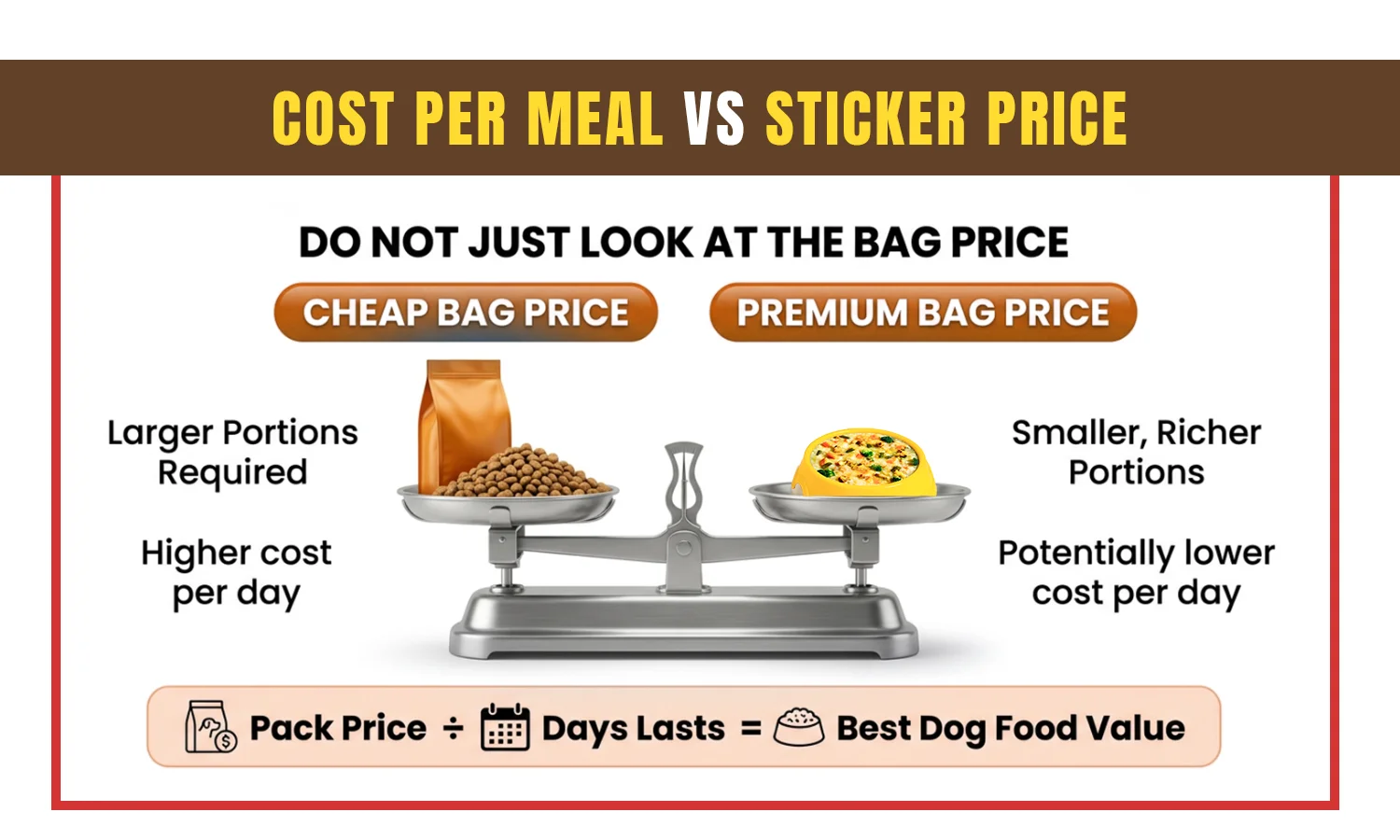
The number on the bag can mislead you. What really counts is the cost per meal, which depends on how much your dog needs each day. A richer recipe may carry a higher dog food price per kilogram but feed your dog in smaller portions, which narrows the gap. To compare two dog food brands fairly, divide the pack price by the number of days it will last for your dog's size.
This is how you find the best dog food value rather than the lowest price. A complete, balanced recipe that keeps your dog healthy can even lower vet costs over time.
Why Premium Dog Food Costs More
Premium dog food earns its higher dog food price through ingredients and process. Expect named proteins high on the list, fewer fillers, and a recipe tested against AAFCO profiles. Some lines add joint, skin, or digestion support. None of this is free, but for many dogs it delivers real benefits in coat, energy, and digestion.
That said, price is not proof of quality on its own. Always check the label so you know what the extra spend actually buys. Healthy dog food can exist at several price points.
Online Shopping and Subscriptions Save Money
Buying dog food online often costs less than the local store thanks to better stock and regular offers. A dog food subscription can lower the dog food price further while making sure you never run out. Bulk packs reduce the cost per kilogram, although you should only buy in bulk if you can store the food properly in India's climate.
Some fresh brands also bundle ready to eat dog food with home delivery, which saves time as well as money. Comparing the best dog food in India across a few online sellers is a quick way to spot the best deal.
How Much Should You Budget?
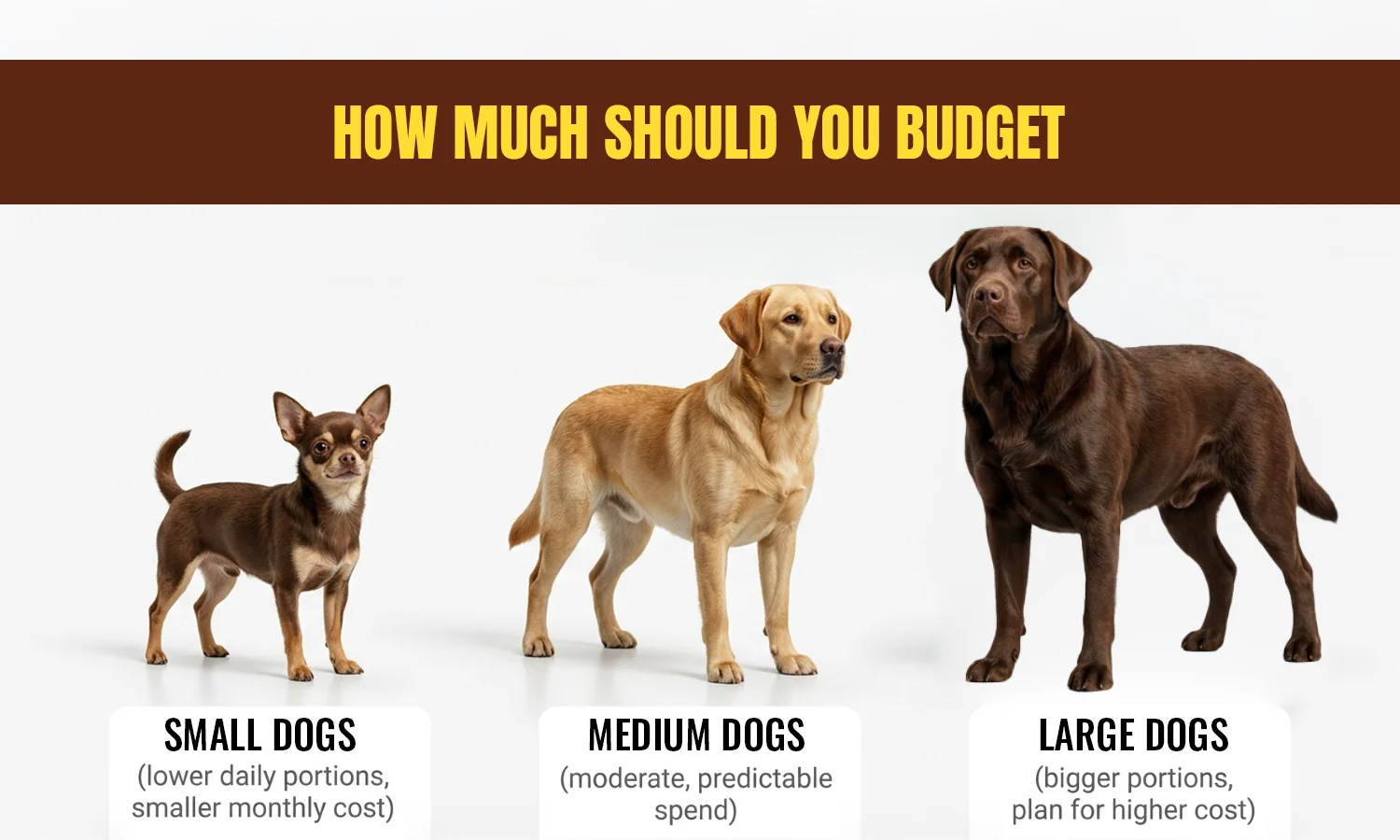
Your monthly spend depends on your dog's weight and the food type. A small dog on a mid range diet costs far less to feed than a large, active dog on a premium recipe. As a rough guide, set a realistic monthly budget, then choose the highest quality dog food India option that fits it.
- Small dogs: lower daily portions, smaller monthly cost.
- Medium dogs: moderate, predictable spend.
- Large dogs: bigger portions, plan for higher cost.
Cutting Costs Without Cutting Quality
You can save without harming your dog's health. Buy the right pack size to avoid waste, use subscriptions for discounts, and skip pricey treats that add little nutrition. Avoid switching foods constantly, since that wastes money and upsets digestion.
Hidden Costs Beyond the Bag
The number on the bag is only part of what you spend each month. Treats add up quickly, especially the rich, packaged kind that offer little nutrition. Supplements, chews, and frequent impulse buys can quietly double a feeding budget without improving your dog's health.
Waste is another hidden cost. Food that spoils in a warm kitchen, or a large bag your dog refuses after a recipe change, is money lost. Buying a sensible pack size and storing it well keeps more of your spend on the plate.
A Simple Way to Compare Value
To compare two products fairly, work out the cost per day rather than the cost per kilogram. Divide the pack price by how many days it will feed your dog, based on the daily portion on the label. A richer recipe fed in smaller amounts can match a cheaper one once you do this maths, and it often keeps your dog in better condition, which can lower vet bills over time.
The smartest approach to dog food price is to think in value, not in rupees alone. A complete, balanced bowl your dog thrives on is always money well spent. Compare cost per meal, shop online, and let quality guide the final call rather than the lowest dog food price on the shelf.
Want to give your dog a happier, healthier life? Visit Wagg N Dine for more simple, reliable guides on dog food, nutrition, and care.
Frequently Asked Questions
1. Why is dog food price so different between brands?
The dog food price reflects protein quality, ingredients, and how the food is made. Fresh and premium recipes cost more than basic kibble because of better sourcing and processing.
2. Does a higher dog food price mean better food?
Not always. A higher dog food price often buys better proteins, but some mid range products meet the same AAFCO standards, so always check the label.
3. How can I lower my dog food price?
Buy online, use subscriptions, and choose the right pack size. These steps cut the dog food price per meal without lowering nutritional quality.
Want to feed smarter for less? Visit Wagg N Dine for more honest guides on dog nutrition and value.
Ready to switch to fresh, vet-approved meals?
Wagg N Dine cooks human-grade dog food fresh every day and delivers it to your door.
Explore Fresh Meals →