Fresh Dog Food vs Kibble: Which Is Actually Better for Your Dog?
Fresh dog food vs kibble, which one truly serves your dog's health, digestion, and longevity? A no-spin comparison for Indian pet parents.
Every Indian pet parent eventually arrives at this fork in the road. The vet shrugs. The breeder swears by one premium brand. Instagram pet influencers eat their own home-cooked food in protest of kibble. The truth is that the fresh dog food versus kibble debate is not actually close on the merits, but the reasons require explaining. This article does that, explaining honestly, including the cases where kibble is the rational choice.
The Manufacturing Reality
If you take the comparison between fresh dog food vs kibble, Kibble is made by extrusion. Raw ingredients, typically fresh dog food is made the way you would make a meal at home, only at industrial scale and with precise nutritional formulation. Whole proteins are cooked at lower temperatures. Vegetables are recognisable. The food is portioned, sealed, and refrigerated or frozen for delivery. There is no extrusion, no synthetic spray-on coating, no preservative system. The shelf life is measured in days, not years.
Nutritional Outcomes Compared
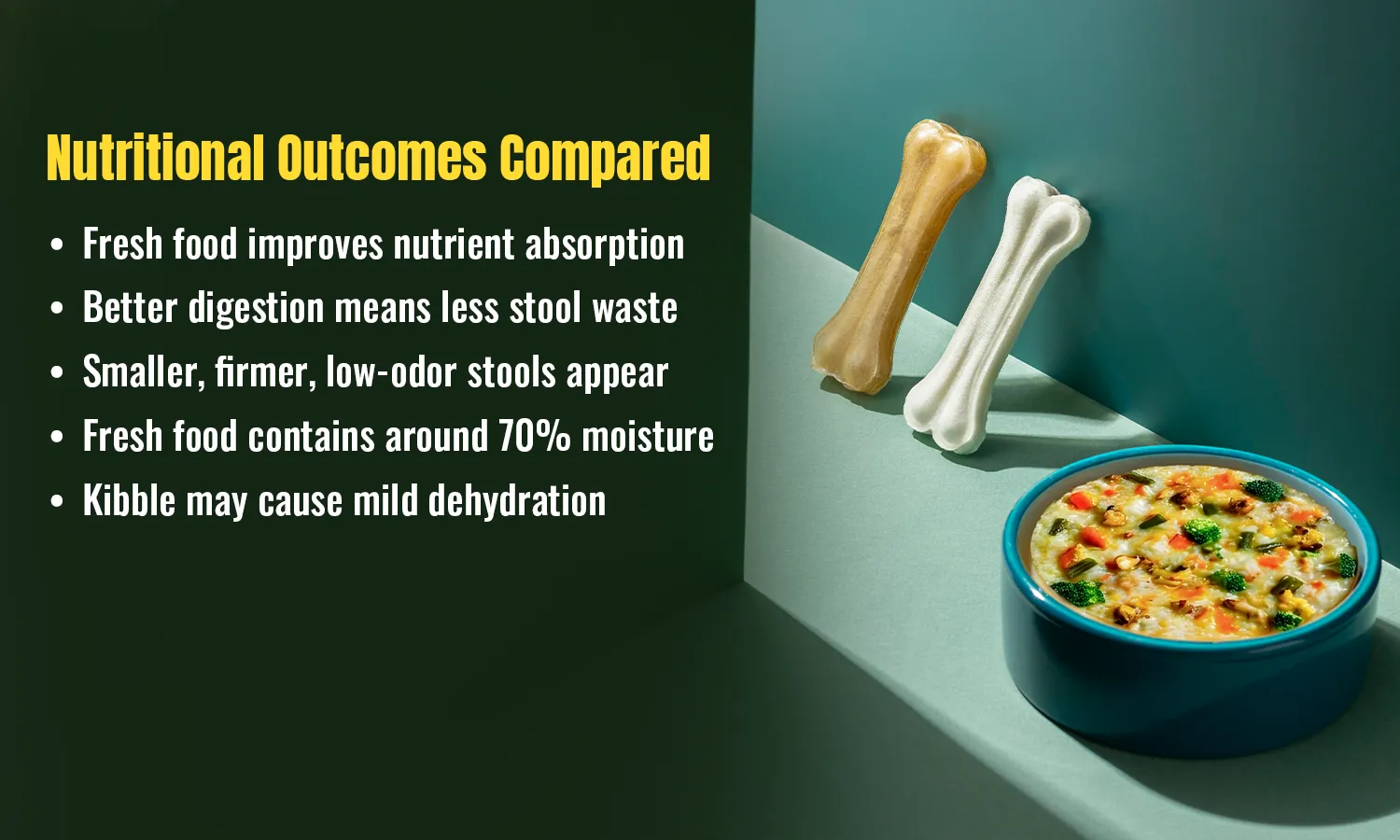
On paper, premium kibbles meet AAFCO standards. So does any properly formulated fresh dog food. The difference is what happens in your dog's gut. Bioavailability is the percentage of nutrients actually absorbed, is consistently higher infresh dog food, which is why the most reliable visible difference after a switch is smaller, firmer, less smelly stools. Less waste means more nutrition has crossed the gut wall.
Hydration is the other under-discussed difference. Kibble is roughly 10% moisture; fresh dog food is roughly 70% close to the natural moisture content of a wild canid's prey. Dogs evolved to draw most of their water from food and drink supplementally. A kibble-fed dog operates in a state of mild chronic dehydration, particularly in the Indian climate.
Visible Differences After Switching
Pet parents who switch to fresh dog food report a predictable sequence of changes. Within the first week, stool quality improves and gas decreases. Within two to three weeks, coat texture changes softer, shinier, less dander. Within a month, energy levels at mealtimes and during walks visibly increase. Within two to three months, chronic skin conditions, ear inflammation, and persistent itch often resolve.
These are not promises peddled by marketing departments. They are the predictable consequences of feeding a dog real food. The reverse pet parents who switch back to kibble after a fresh dog food trial is rare. Once a dog has been on fresh dog food for a month, kibble simply does not register as food in the same way.
When Kibble Is the Rational Choice
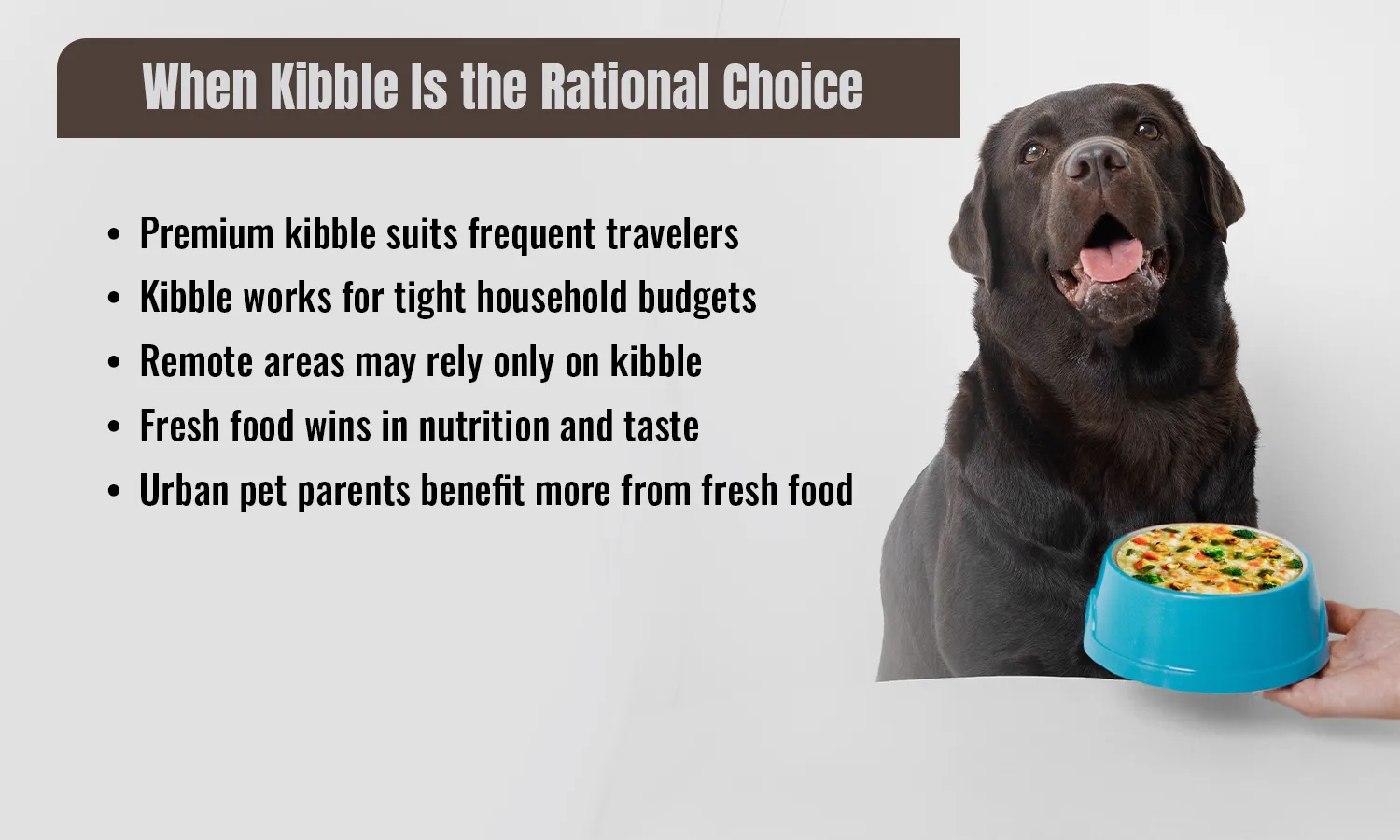
Honesty requires acknowledging that kibble has legitimate use cases. If you travel frequently with your dog and need shelf-stable food, premium kibble is practical. If your household budget genuinely cannot stretch to fresh dog food and the alternative is feeding leftovers from family meals, a good kibble is a defensible compromise. If you live in a remote area with no fresh dog food delivery available, kibble is what is available.
But for the typical urban Indian pet parent in a metro, with a refrigerator and a reliable delivery address, the choice is really between premium kibble and fresh dog food. And on every dimension that matters ingredients, processing, hydration, palatability, digestibility, long-term health, fresh dog food wins.
Cost: The Real Calculation
Per kilogram, fresh dog food costs more than kibble. Per healthy year of your dog's life, the equation flips. A 2018 review in the Journal of Animal Science noted that diet quality is among the strongest modifiable predictors of canine longevity and chronic disease incidence. Pet parents who feed fresh dog food consistently report lower lifetime veterinary spending, fewer skin allergy treatments, fewer dental cleanings, fewer chronic gastrointestinal complaints.
Wagg N Dine's annual subscription brings the per-meal cost of fresh dog food to within a manageable premium over premium kibble and includes the operational simplicity of automatic delivery, portioned packs, and breed-specific formulation.
Mixed Feeding: A Sensible Middle Path
If a full switch to fresh dog food feels daunting, mixed feeding is a legitimate transitional strategy. Many pet parents start with one fresh dog food meal a day and one kibble meal, gradually increasing the fresh proportion. Over a few weeks, most households complete the transition naturally,the dog's enthusiasm for fresh dog food makes the case more persuasively than any article ever will.
Make the Switch on Your Terms
Wagg N Dine offers flexible monthly and annual subscription plans designed for exactly this kind of transition. Start with a small plan, mix with your current kibble, and let your dog show you what fresh dog food actually does. The switch is easier and the difference is bigger than most pet parents expect.
FAQs:
Q1: Is fresh dog food vs kibble better for my dog's digestion?
A: Fresh dog food wins because its high bioavailability and natural moisture result in smoother digestion, less gas, and smaller, firmer stools.
Q2: Can I mix both options when deciding between fresh dog food vs kibble?
A: Yes, mixed feeding is a great middle path where you can serve one fresh meal and one kibble meal daily to ease the transition.
Q3: How does the hydration level differ in fresh dog food vs kibble?
A: Fresh dog food contains about 70% moisture to keep dogs hydrated, whereas kibble has only 10%, which can cause mild chronic dehydration.
Q4: Is fresh dog food vs kibble more cost-effective in the long run?
A: While fresh food costs more upfront, it lowers long-term vet bills for skin allergies and stomach issues, making it highly cost-effective.
Q5: When should a pet parent choose kibble over fresh dog food vs kibble?
A: Kibble is the rational choice if you travel frequently, have a tight budget, or live in remote areas without fresh food delivery.
Ready to switch to fresh, vet-approved meals?
Wagg N Dine cooks human-grade dog food fresh every day and delivers it to your door.
Explore Fresh Meals →