How is Pet Food Made? Process, Ingredients & Safety Guide
Discover how pet food is made, from ingredients to safety checks. Learn about fresh pet food and how to choose the best option online.
Introduction
Pet owners today are paying closer attention to what goes into their pet’s bowl—and rightly so. Understanding how pet food is made gives you a clearer picture of quality, safety, and nutritional value.
From sourcing raw ingredients to final packaging, every stage influences how effective the food is for your pet’s health. Whether you’re choosing kibble or exploring fresher alternatives, knowing how pet food is made helps you move beyond labels and make informed decisions.
What Is Fresh Pet Food?
Before diving deeper into how pet food is made, it’s useful to understand what fresh pet food really means. Fresh pet food focuses on minimally processed meals prepared using whole ingredients that are closer to their natural state.
These meals are usually cooked gently instead of being exposed to extreme heat. This helps retain nutrients that are often lost in traditional processing. Because of this, many pet owners see it as a better alternative to heavily processed options.
Another reason for its growing popularity is the shift toward natural pet food, where ingredients are recognisable and free from unnecessary additives. This approach supports better digestion and overall wellness.
What Are The Ingredients Used In A Fresh Pet Food?
A big part of understanding how pet food is made lies in the ingredients used. Fresh meals are typically built around a balance of proteins, vegetables, fats, and essential nutrients.
High-quality proteins like chicken, fish, or lamb form the base, supporting muscle development and energy. Vegetables such as carrots, spinach, and pumpkin add fibre and vitamins that aid digestion. Healthy fats are included to maintain skin health and provide sustained energy.
Some pet parents also experiment with homemade pet food to have more control over what their pets consume. While this can be beneficial, it requires careful planning to ensure meals remain nutritionally complete.
The overall goal is simple: create healthy pet food that is both nourishing and easy to digest.
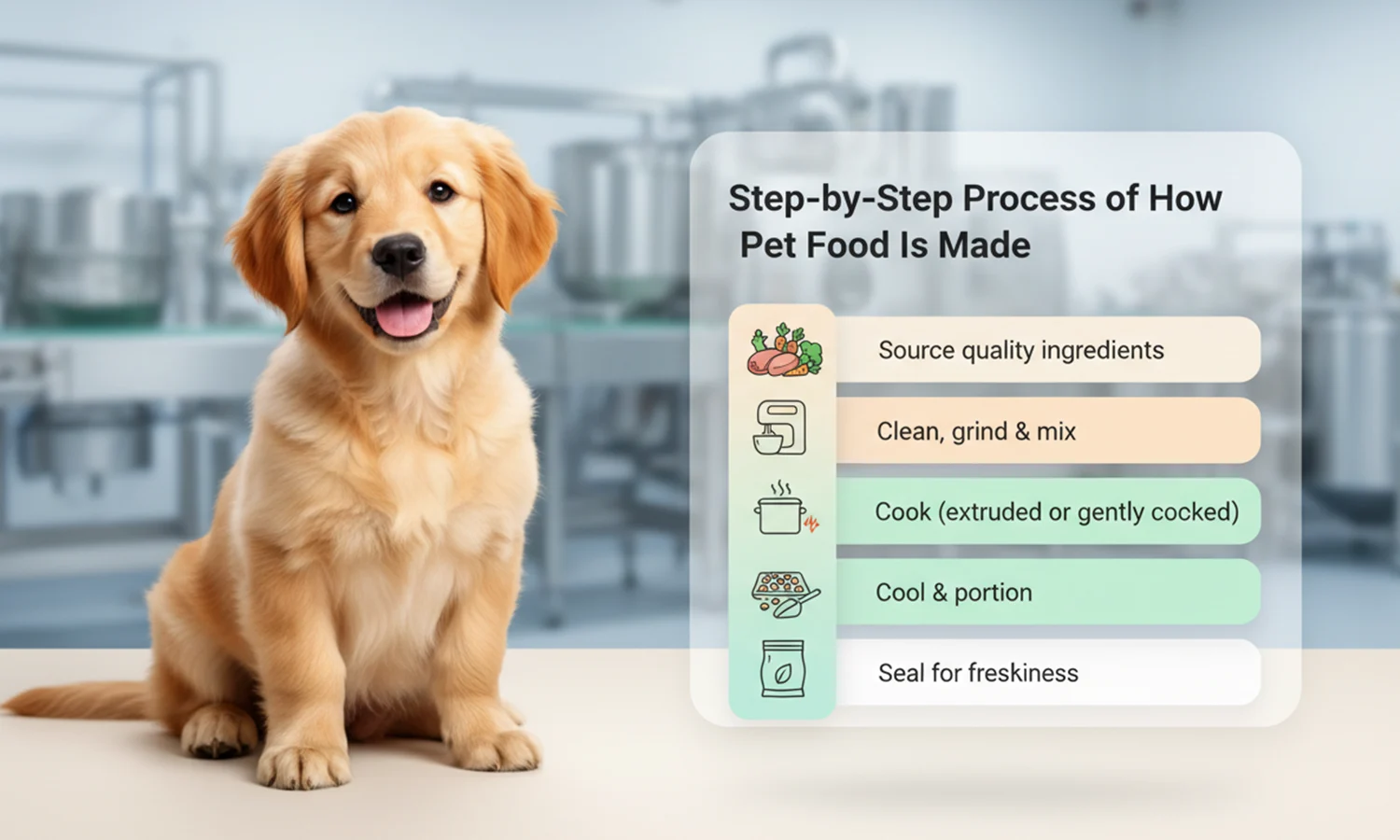
Step-by-Step Process of How Pet Food Is Made
To fully understand how pet food is made, it helps to look at the process in stages. Each step is designed to ensure safety, consistency, and nutritional balance.
The process begins with sourcing. Ingredients are carefully selected and tested before entering production. Trusted pet food brands follow strict checks to ensure quality at this stage.
Next comes preparation, where ingredients are cleaned, ground, and blended into a uniform mixture. This ensures that every portion contains a consistent balance of nutrients.
Cooking is where the biggest differences appear. Traditional kibble is made using high-temperature extrusion, which often leads people to question how dog food is really made on a large scale. Fresh meals, on the other hand, are gently cooked to preserve nutrients and flavour.
Once cooked, the food is cooled, portioned, and packed. Products sold through pet food online platforms are carefully sealed to maintain freshness and safety during storage and transport.
Quality Checks and Safety Standards in Pet Food Manufacturing
Another important aspect of how pet food is made is the level of safety involved. Pet food manufacturing follows strict quality control measures to ensure every batch is safe for consumption.
Ingredients are tested for contaminants before processing. During production, temperature and hygiene levels are closely monitored. After cooking, final products undergo nutritional analysis to confirm they meet required standards.
These checks are especially important for services offering pet food delivery, where maintaining quality throughout the supply chain is critical.
Reliable production practices ensure that pets receive food that is both safe and nutritionally balanced.
Buying Pet Food Online? Choose Wagg N Dine
As convenience becomes a priority, more pet owners prefer to buy pet food online rather than visiting stores. Online platforms offer access to a wide range of products, making it easier to compare and choose.
However, the source matters just as much as the product. Choosing a trusted platform ensures consistent quality and reliability. Wagg N Dine is one such option that focuses on providing thoughtfully curated meals designed to support your pet’s daily nutrition.
With access to reliable options from leading pet food brands, it simplifies the process of finding food that matches your pet’s needs without compromising on quality.
Conclusion
Taking the time to understand how pet food is made changes the way you approach pet nutrition. It shifts the focus from marketing claims to real factors like ingredient quality, processing methods, and safety standards.
As feeding choices evolve, pet owners are increasingly prioritising transparency and nutrition. Whether you choose fresh meals or traditional options, knowing how pet food is made allows you to make confident, informed decisions that benefit your pet in the long run.
Frequently Asked Questions
1. Can fresh pet food be vegetarian?
Yes, some fresh pet food options are vegetarian. However, most recipes include animal protein, since it helps meet a pet’s nutritional needs, especially for cats.
2. Which companies make pet food?
Pet food is made by specialised manufacturers. These range from large, established companies to smaller niche brands that focus on fresh or customised meals.
3. Is artificial preservative used in all pet foods?
Not at all. Many modern pet foods, particularly fresh and natural ones, skip artificial preservatives and rely on safer alternatives instead.
4. Is fresh pet food better than kibble?
Fresh pet food is minimally processed and gently cooked, so it retains more of the nutrients that high-heat extrusion can reduce. Many pet owners also find it more palatable and easier to digest. That said, a complete and balanced kibble can still be a sound choice, so the best option depends on your pet’s age, health, and budget.
5. How long does it take to make pet food?
Production time varies by type. Kibble goes from mixing to packing in a matter of hours, while fresh meals involve extra steps like gentle cooking, cooling, and portioning. Both are followed by quality checks before the food is cleared for sale.
6. How can I tell if a pet food is high quality?
Look for a named protein (such as chicken or lamb) as the first ingredient, a clear nutritional adequacy statement, and minimal artificial additives. Brands that are transparent about sourcing and testing are generally a safer bet.
Ready to switch to fresh, vet-approved meals?
Wagg N Dine cooks human-grade dog food fresh every day and delivers it to your door.
Explore Fresh Meals →