Top 6 Ingredients Every Dog's Diet Should Include
Learn the Ingredients Every Dog's Diet Should Include to support digestion, energy and long-term health in a simple way.
Top 6 Ingredients Every Dog's Diet Should Include
Feeding your dog can feel confusing today. There are so many packets, treats and advice videos. But the truth is simple. A good bowl is made from a few key ingredients that support your dog's health every day. That is why knowing the Ingredients in your Dog's Diet is necessary. When the ingredients are right, your dog's tummy stays calm, their coat feels soft and their energy remains steady.
This blog will help you understand what should be in your dog's daily meals and how it can be balanced
Why Choosing the Right Ingredients Matters for Your Dog's Health
Your dog eats what you give them, every day. So what we think are small ingredient choices form into big health results over time. Good ingredients help your dog absorb nutrients easily, stay active and avoid problems like weight gain or gut trouble. This is the base of dog nutrition and it is more important than fancy labels.
A meal can look full, but still miss what the body needs. So when you focus on the Ingredients that Every Dog's Diet Should Include, you are choosing long-term comfort and a full stomach.
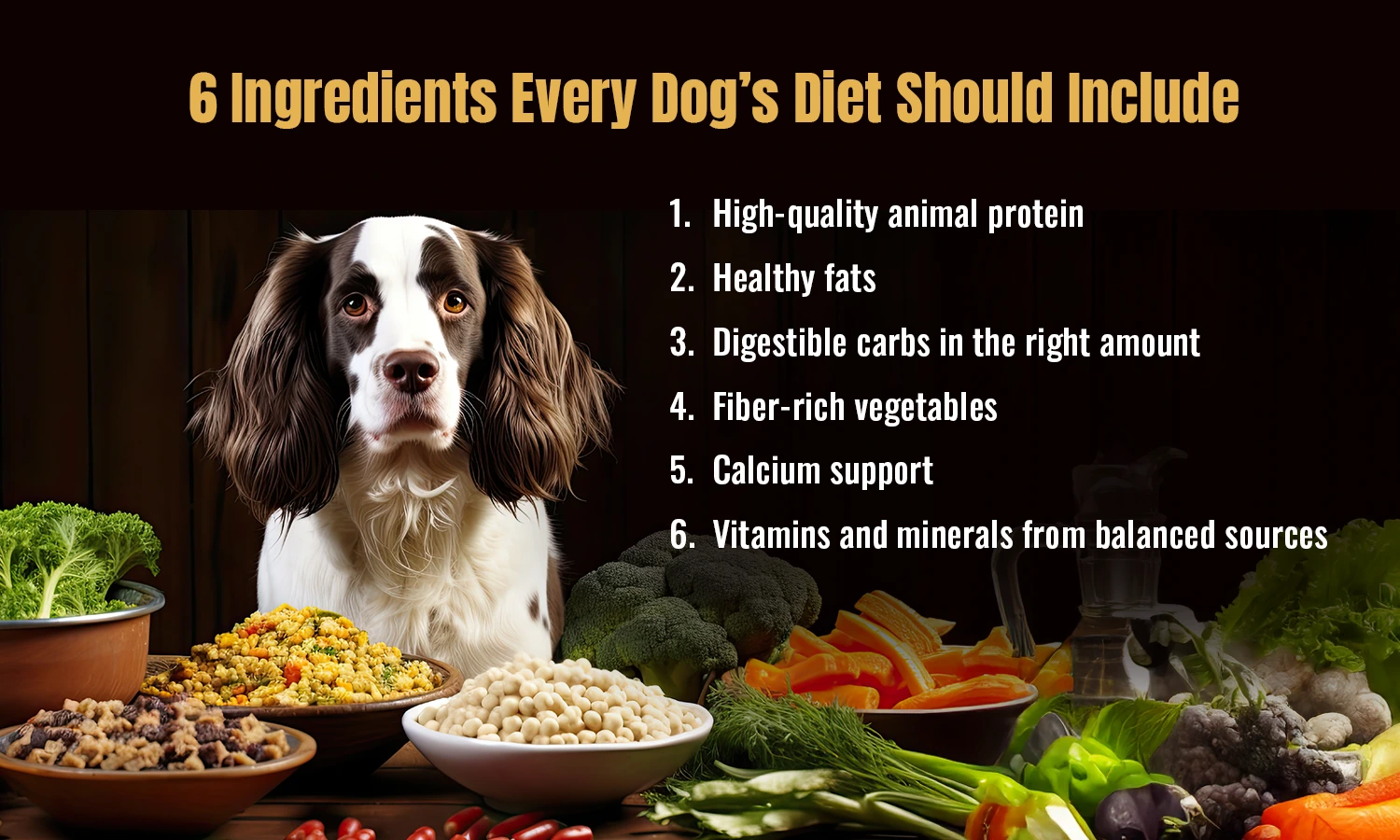
6 Ingredients Every Dog's Diet Should Include
1. High-quality animal protein
Protein helps build muscles and supports immunity. Chicken, eggs, fish, or lean meat are common sources. Protein should be the core nutrition in your dog's bowl because dogs are naturally made to use it well.
2. Healthy fats
Fats give energy and support the skin and coat. They also help your dog absorb some vitamins. Good fats come from fish oil, egg yolk, or small amounts of clean meat fat. Too much fat is not good, but the right amount keeps your dog strong.
3. Digestible carbs in the right amount
Rice, oats and sweet potatoes are common gentle carbs. They provide energy and support digestion. Carbs should not be the biggest part of the bowl, but they help create a steady routine, especially for active dogs.
4. Fiber rich vegetables
Safe veggies like pumpkin, carrot, beans and spinach aid in better gut movement and stool quality. They also add natural vitamins to the diet. Veggies shouldn't be overcooked, so your dog can break them down easily.
5. Calcium support
Calcium keeps bones and teeth strong. Most households miss this. If your dog eats a fresh meals daily, you need a safe calcium source like egg shell powder or vet suggested supplements. This is part of the essential nutrients for dogs that helps long-term health.
6. Vitamins and minerals from balanced sources
Dogs need a mix of nutrients that cover daily needs. Meat alone does not provide everything. A proper fresh plan includes the right essential vitamins and minerals for dogs, either through balanced recipe design or vet guided supplements. This is what makes a bowl complete, not just tasty.
These six points together create the Ingredients Every Dog's Diet Should Include for a strong daily diet.
Ingredients in processed food that affect the dog's health
Many packet foods are safe, but some rely on heavy fillers, strong flavor coatings, or high salt to stay cheap and tasty. Over years, this can lead to weight gain, itching, or stomach trouble in some dogs.
Another worry is that some highly processed diets lose natural food structure due to high heat. This can make digestion harder for sensitive dogs. That is why many owners now mix in fresh food for dogs a few times a week, or switch to fresh plans fully if their dog does better on it.
So when you read dog food ingredients on a label, look for clear protein sources, controlled carbs and low salt. Avoid foods that feel too starchy or too oily.
Build a Balanced Bowl for a Healthier, Happier Dog
A balanced bowl is not complicated. Think of it like this:
Protein first, then a small carb part, then veggies, then fats and minerals. That mix creates a balanced diet for dogs that your pet can enjoy daily.
If you are cooking at home, follow a trusted recipe and add calcium and minerals properly. If you are busy, a fresh meal plan makes it easier to stay steady without guessing. Either way, the goal is to keep the Ingredients Every Dog's Diet Should Include in every routine bowl.
Conclusion
Your dog does not need fancy food. They need the right building blocks in the right balance. Protein, fats, gentle carbs, veggies, calcium and complete vitamins together support digestion, coat, energy and long term comfort. Once you understand the Ingredients Every Dog's Diet Should Include, feeding becomes simple and clear. If you want a ready fresh plan that follows these basics, choose Wagg N Dine. We cook balanced home style meals, serve them warm at the right temperature and portion them for your dog's needs.
Key Takeaways
The Ingredients Every Dog's Diet Should Include start with protein, fats, carbs, veggies, calcium and vitamins.
A bowl can be full but still miss minerals, so balance matters.
Some processed foods use fillers and coatings that may not suit all dogs.
Fresh meals help many dogs digest better when recipes are complete.
A steady balanced routine keeps your dog healthier over time.
FAQs
Can I Feed My Dog Boiled Chicken Every Day?
Boiled chicken is a good protein, but it cannot be the only food daily. Dogs also need calcium, fats, veggies and minerals. If you want to feed chicken often, add the other key parts so the diet stays complete.
How Much Protein Does My Dog Need?
Protein needs change with size, age and activity. Puppies and active dogs need more. Senior dogs need steady protein but easy digestion. A simple rule is protein should be the main part of the bowl, but not the only part.
What Is The Healthiest Food To Feed My Dog?
The healthiest food is one that is complete, balanced and suits your dog's stomach. It should include the right mix of ingredients, not only one item like meat or rice. Watch your dog's stools, coat and energy to know what works best.
You might also like


Ready to switch to fresh, vet-approved meals?
Wagg N Dine cooks human-grade dog food fresh every day and delivers it to your door.
Explore Fresh Meals →