Low-Fat Dog Food: When Your Dog Needs It and How Fresh Food Delivers It Best
Low-fat dog food is essential for pancreatitis recovery, weight management, and senior dogs. Here’s why fresh dog food is the gold standard for low-fat feeding.
Veterinarians prescribe a low-fat dog food more often than most pet parents realise for pancreatitis, hyperlipidaemia, gallbladder disease, certain forms of inflammatory bowel disease, and increasingly for the genuinely overweight Indian dog who has been quietly accumulating weight on calorie-dense kibble. The challenge has always been execution. Cutting fat without compromising palatability or completeness is hard, and most commercial low-fat kibbles fail one or the other test. Fresh dog food, prepared in a cloud kitchen with precise ingredient control, has changed this equation.
Why Fat Matters
Fat is calorically dense, nine calories per gram against four for protein and carbohydrate, and metabolically demanding. The pancreas releases lipase to digest it, and dogs are prone to pancreatitis, even moderate dietary fat can trigger acute, dangerous flare-ups. Excess dietary fat also contributes to obesity, joint stress, and cardiovascular load.
A typical commercial kibble contains 12-18% crude fat. A low-fat dog food formulation should sit below 10% on a dry-matter basis, and for dogs in active recovery from pancreatitis, below 7%. Achieving these numbers while maintaining palatability and complete nutrition is the technical challenge, and where fresh dog food shines.
When Your Dog Needs Low-Fat Dog Food
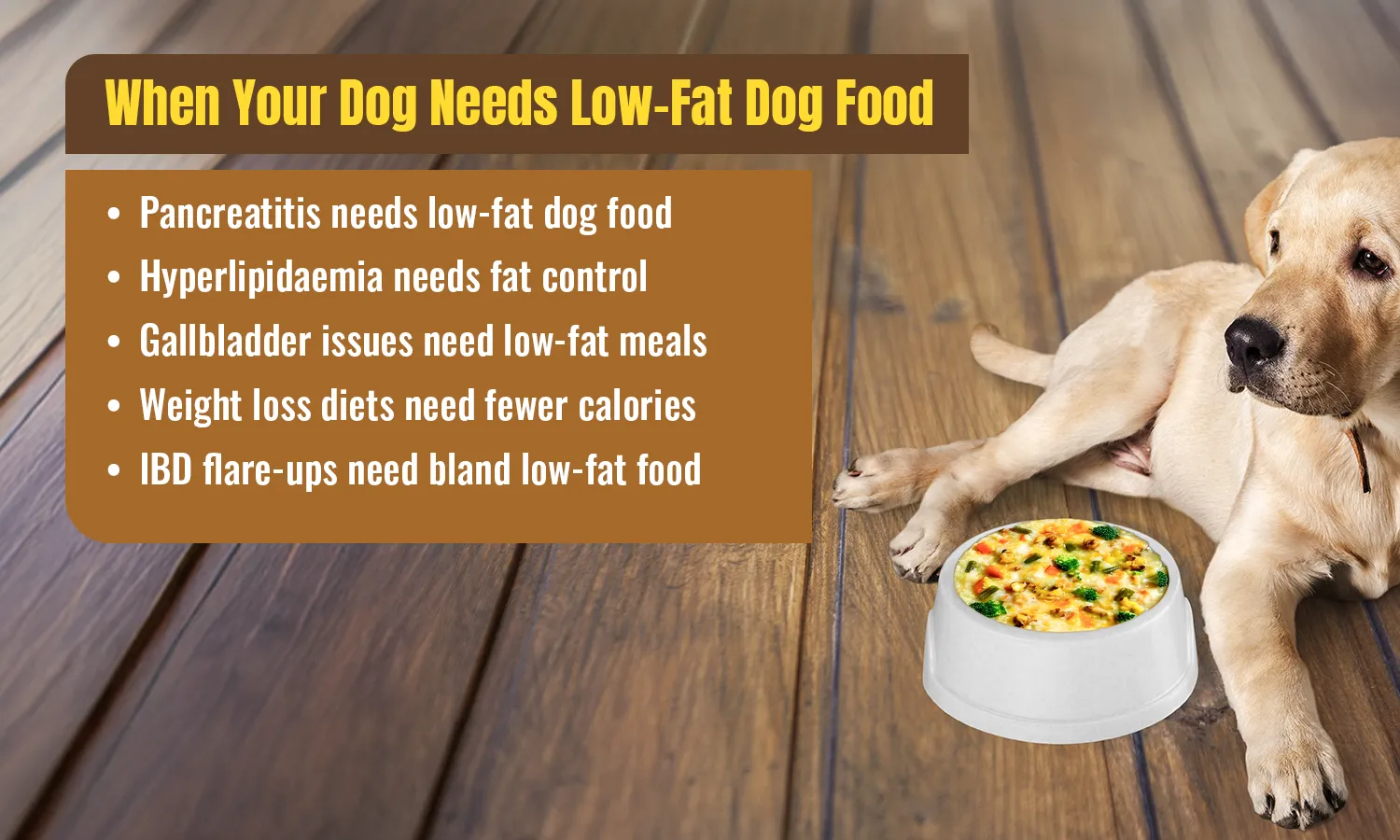
Low-fat dog food is indicated in several common scenarios. Acute or chronic pancreatitis is the textbook case. So hyperlipidaemia is elevated blood triglycerides that disproportionately affect Schnauzers, Beagles, and certain mixed breeds. Dogs recovering from gallbladder disease or biliary stasis benefit from reduced fat to ease bile production. Overweight dogs entering structured weight loss benefit from controlled-calorie, high-fibre fresh dog food formulations that produce satiety without extra calories.
Senior dogs with reduced exercise tolerance often benefit from a moderate reduction in fat without dropping into clinical low-fat territory. And dogs with certain forms of inflammatory bowel disease respond well to bland, low-fat fresh dog food during flare-ups.
Why Fresh Beats Low-Fat Kibble
Commercial low-fat kibble has a structural problem. To remove fat without losing palatability, manufacturers typically increase carbohydrate or add flavour enhancers, both of which create their own issues. High-carb, low-fat kibble destabilizes blood sugar in diabetic-prone dogs. Flavour-enhanced kibble masks staleness and over-rewards the palate without actually delivering nutrition.
Fresh dog food avoids both pitfalls. A well-formulated low-fat dog food meal uses lean proteins, such as skinless chicken breast, white fish, lean mutton with fibre-rich vegetables like pumpkin, green beans, and spinach to deliver satiety. The flavour comes from real food, gently cooked. There is no need for synthetic palatability tricks because actual food, prepared properly, is intrinsically palatable.
Building a Fresh Low-Fat Dog Food Bowl
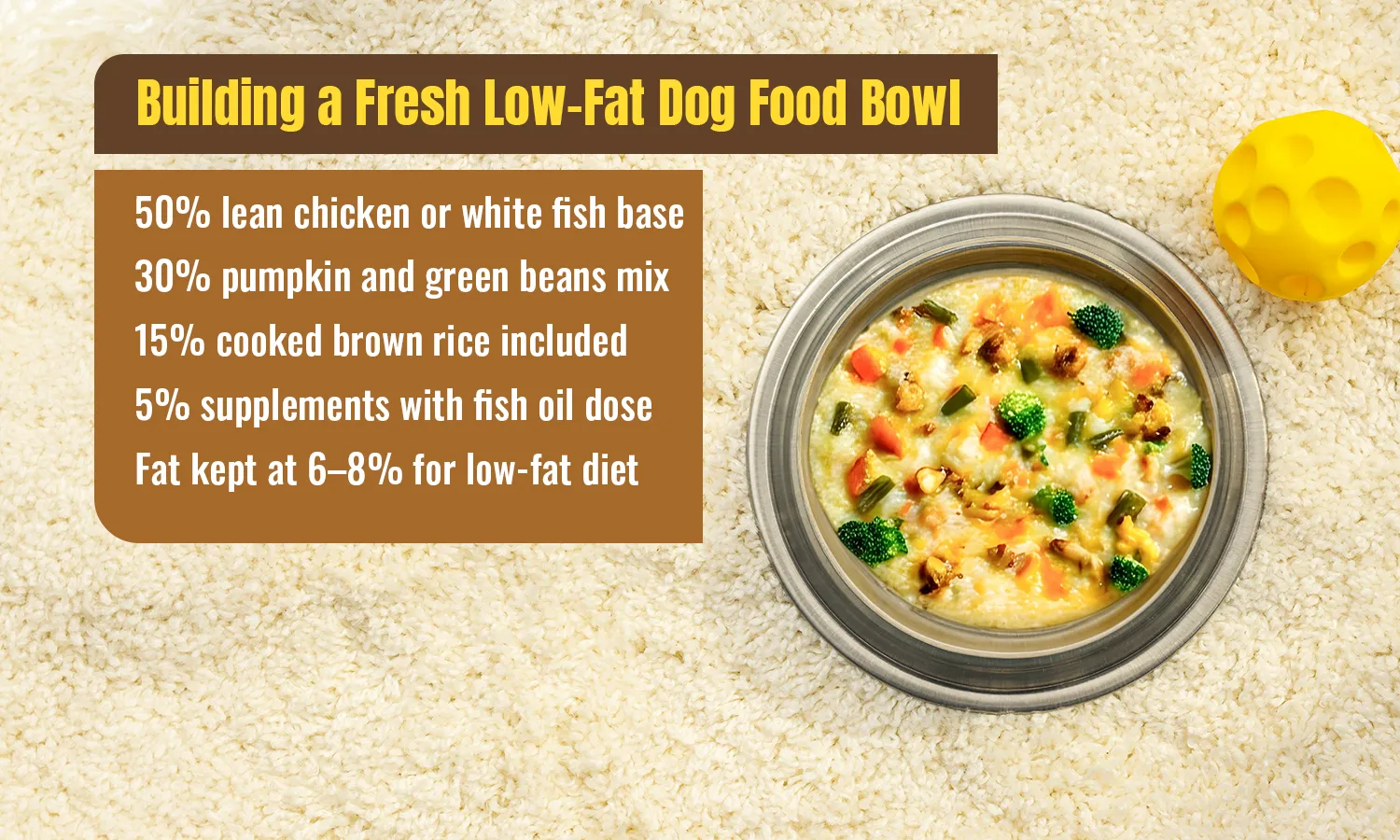
A typical fresh low-fat bowl might be 50% skinless chicken breast or white fish, 30% steamed pumpkin and green beans, 15% cooked brown rice, and 5% supplements including a measured dose of fish oil for essential fatty acids. The total fat content sits around 6-8% on a dry-matter basis, within clinical low-fat territory while remaining nutritionally complete.
What this allows is precision that a kibble bag cannot match. The fat content of a fresh dog food meal can be adjusted per dog, per condition, per phase of recovery. A veterinarian can prescribe specific parameters, total fat, fibre content, calorie target and a fresh dog food provider can implement them in the next delivery.
Practical Considerations for Indian Pet Parents
If your veterinarian has recommended low-fat dog food, several practical points matter. Transition gradually; even a low-fat diet introduced abruptly can upset a recovering gut. Avoid table scraps entirely during the recovery period, since most Indian household food is far higher in fat than is safe for a pancreatitis-prone dog. Watch for hidden fats in treats, chews, and rawhides.
A subscription model for fresh dog food simplifies this enormously. Once you have a low-fat plan in place, the food just arrives. There is no shopping for the right kibble, no risk of accidental fat overload from changing brands, no decoding of fat percentages on competing labels.
How Wagg N DIne Handles Low-Fat Plans
Wagg N Dine builds custom low-fat dog food plans based on veterinary input, with verified fat percentages on every meal pack. Recipes use lean proteins and high-fibre vegetables, and our nutritionists adjust formulations as your dog progresses through recovery or weight loss. The Human Grade meal subscription is monthly or annual, and low-fat plans can be modified at any point without contractual hassle.
Get a Low-Fat Plan Built for Your Dog
If your vet has recommended a low-fat diet, Wagg N Dinecan build it. Tell us your dog's weight, condition, and target fat percentage, and we will deliver vet-aligned fresh dog food that meets the prescription. No guesswork, no shopping, no compromise.
FAQS -
1. Why do veterinarians often prescribe low-fat dog food for Indian pets?
Vets recommend low-fat dog food to manage conditions like pancreatitis and obesity, ensuring the diet is less metabolically demanding while aiding recovery.
2. Can low-fat dog food help my dog lose weight effectively?
Yes, a high-fibre, low-fat dog food plan creates a sense of fullness with fewer calories, making it much easier for overweight dogs to reach a healthy weight.
3. Is fresh food better than kibble for a low-fat dog food diet?
Fresh low-fat dog food uses lean, real proteins like white fish or skinless chicken, providing natural flavour without the synthetic additives found in low-fat kibble.
4. How do I know if my pet requires a specialized low-fat dog food?
If your dog suffers from chronic gas, pancreatitis, or belongs to a breed prone to high triglycerides, switching to low-fat dog food can prevent dangerous flare-ups.
5. Is it safe to mix table scraps with a low-fat dog food plan?
You should avoid scraps, as typical household food is too greasy; sticking strictly to a low-fat dog food subscription ensures your dog’s fat intake remains within safe limits.
Ready to switch to fresh, vet-approved meals?
Wagg N Dine cooks human-grade dog food fresh every day and delivers it to your door.
Explore Fresh Meals →