Organic Dog Food: Separating Real Claims From Marketing
Know what true vet recommended dog food is. Learn what veterinarians check before approving a dog's diet and how they give a brand their stamp of approval.
Overview
Vet recommended dog food should meet specific nutritional standards verified by a veterinarian, not simply carry a marketing endorsement. Vets typically evaluate protein quality, ingredient sourcing and suitability for a dog's age, breed and health condition. Fresh, transparently prepared meals make it easier for vets to assess and recommend a diet with confidence.
What Does "Vet Recommended" Actually Mean?
The phrase vet recommended dog food appears on countless packages, but its meaning varies significantly depending on the brand. In some cases, it reflects genuine clinical evaluation by veterinary professionals. In others, it is closer to a marketing phrase with limited independent verification behind it. Pet parents benefit from understanding this distinction before making feeding decisions based solely on packaging claims.
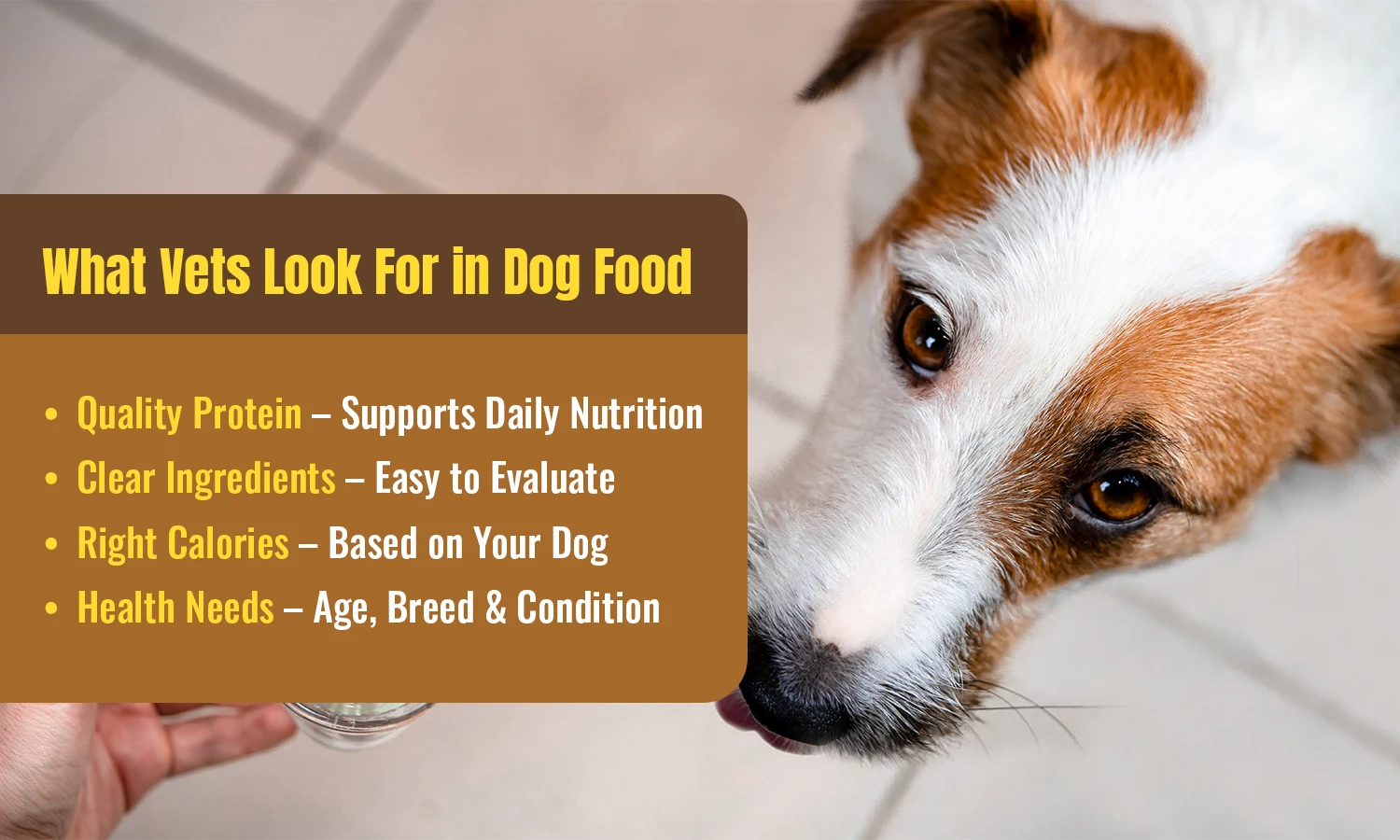
A genuinely vet recommended dog food is typically assessed on factors including protein quality and digestibility, appropriate calorie density for the dog's life stage, and the absence of harmful additives. Vets consider these details in the context of an individual dog's breed, age and any existing health conditions, which is why a truly personalised recommendation often carries more weight than a general label claim.
Why Fresh, Transparent Meals Make Vet Evaluation Easier
Dog food price aside, one practical advantage of fresh, whole-ingredient meals is that vets can evaluate them more easily than heavily processed kibble with vague ingredient descriptions. When a meal is made from named ingredients like chicken, rice and vegetables, a vet can assess nutritional adequacy with much greater confidence than when reviewing a label listing "meat derivatives" or unspecified "animal fat."
Fresh dog food prepared with clear, identifiable ingredients gives vets a much clearer basis for approval or adjustment recommendations. This is particularly useful for dogs with specific health conditions, where a vet may need to recommend slight modifications, such as reduced fat or increased protein, based on the dog's individual bloodwork and history.
How Wagg N Dine Approaches Ingredient Transparency
Wagg N Dine's meals are built around fresh natural dog food principles, using named, whole ingredients rather than processed fillers. Fresh pet food made like home meals, delivered on a steady subscription so owners do not have to plan every week, gives pet parents a transparent starting point to discuss with their vet, particularly if their dog has specific dietary needs.
For just ₹3,499 per month, your dog receives two fresh meal packs every day, 750 g in the morning and 750 g in the evening, for 1.5 kg of freshly prepared food delivered daily to your home. This consistency, paired with ingredient transparency, makes it easier for pet parents to have informed conversations with their vet about whether the meal plan suits their dog's specific needs.
Questions to Ask Your Vet About Dog Food
Rather than relying purely on packaging claims, bring your dog's current food ingredient list to your next vet visit and ask specific questions: does this cooked dog food provide adequate protein for my dog's age and activity level? Are there any ingredients here that could be a concern given my dog's health history? A vet can give valuable feedback that no generic label claim can replicate.
Premium dog food brands that welcome this kind of scrutiny, rather than discouraging it, tend to be more trustworthy overall. If a brand cannot clearly explain its ingredient sourcing or nutritional profile when asked directly, that hesitation itself is worth noting as a potential red flag.
Building Trust Through Transparency, Not Just Labels
Ready-to-eat dog food that is genuinely vet-approved should be able to withstand scrutiny beyond the packaging itself. This means clear ingredient lists, disclosed nutritional breakdowns, and a willingness from the brand to discuss formulation details with pet parents and veterinarians alike.
Dog food online shoppers researching the best dog food brands should treat "vet recommended" as a starting point for further questions rather than a final verification. A quick follow-up question to your own vet, referencing the specific brand and ingredient list, can confirm whether the claim holds up for your dog's particular needs.
The Bigger Picture: Partnering With Your Vet
Dog food delivery services that prioritize fresh, transparent ingredients make it far easier to build an ongoing partnership with your vet around your dog's diet. Rather than a one-time purchase decision, feeding your dog well becomes an evolving conversation that adjusts as your dog ages or as health needs change.
Chicken dog food made from named, whole cuts, delivered fresh and consistently, gives both pet parents and vets a stable foundation to build dietary decisions around, whether that means maintaining the current plan or making small adjustments based on bloodwork or physical exams over time.
Key Takeaways
- Vet recommended dog food claims vary in credibility, from genuine clinical evaluation to marketing language.
- Fresh, named-ingredient meals are easier for vets to assess accurately than vague kibble labels.
- Bring your dog's current food ingredient list to vet visits for a professional opinion.
- Wagg N Dine's transparent, fresh natural dog food supports informed conversations with your vet.
- Treat "vet recommended" labels as a starting point, not a final verification of quality.
Frequently Asked Questions
1. How do I know if a vet recommended dog food claim is genuine?
Ask your own vet to review the ingredient list and nutritional breakdown of any vet recommended dog food you are considering. A genuine recommendation should hold up to independent scrutiny from a veterinarian who is not affiliated with the brand.
2. Should I always follow vet recommended dog food brands?
Vet guidance is valuable, but the best diet ultimately depends on your individual dog's age, breed, activity level and health history. Use vet recommendations as informed guidance rather than a one-size-fits-all rule.
3. Does fresh dog food need vet approval more than kibble?
Not necessarily more, but fresh food's ingredient transparency actually makes vet evaluation easier and more precise compared to some processed kibble with vague ingredient sourcing.
4. Can my vet help me switch to a fresh dog food subscription?
Yes, most vets are happy to review a fresh food subscription's ingredient list and nutritional profile, and can advise on portion sizes or adjustments based on your dog's specific health needs.
Start a Conversation With Your Vet Today
Wagg N Dine's transparent, premium dog food gives you a clear ingredient list to discuss with your vet. With 1.5 kg of freshly prepared meals delivered daily for ₹3,499 per month, you can feed your dog with confidence, backed by real conversations, not just a label.
Visit Wagg N Dine to learn more about fresh dog food and feeding options.
Ready to switch to fresh, vet-approved meals?
Wagg N Dine cooks human-grade dog food fresh every day and delivers it to your door.
Explore Fresh Meals →