Natural Dog Food in India: Is Your Dog Really Eating Clean?
Most Indian dog food brands hide fillers behind fancy labels. Here is how real natural dog food looks and why your dog deserves it.
Overview
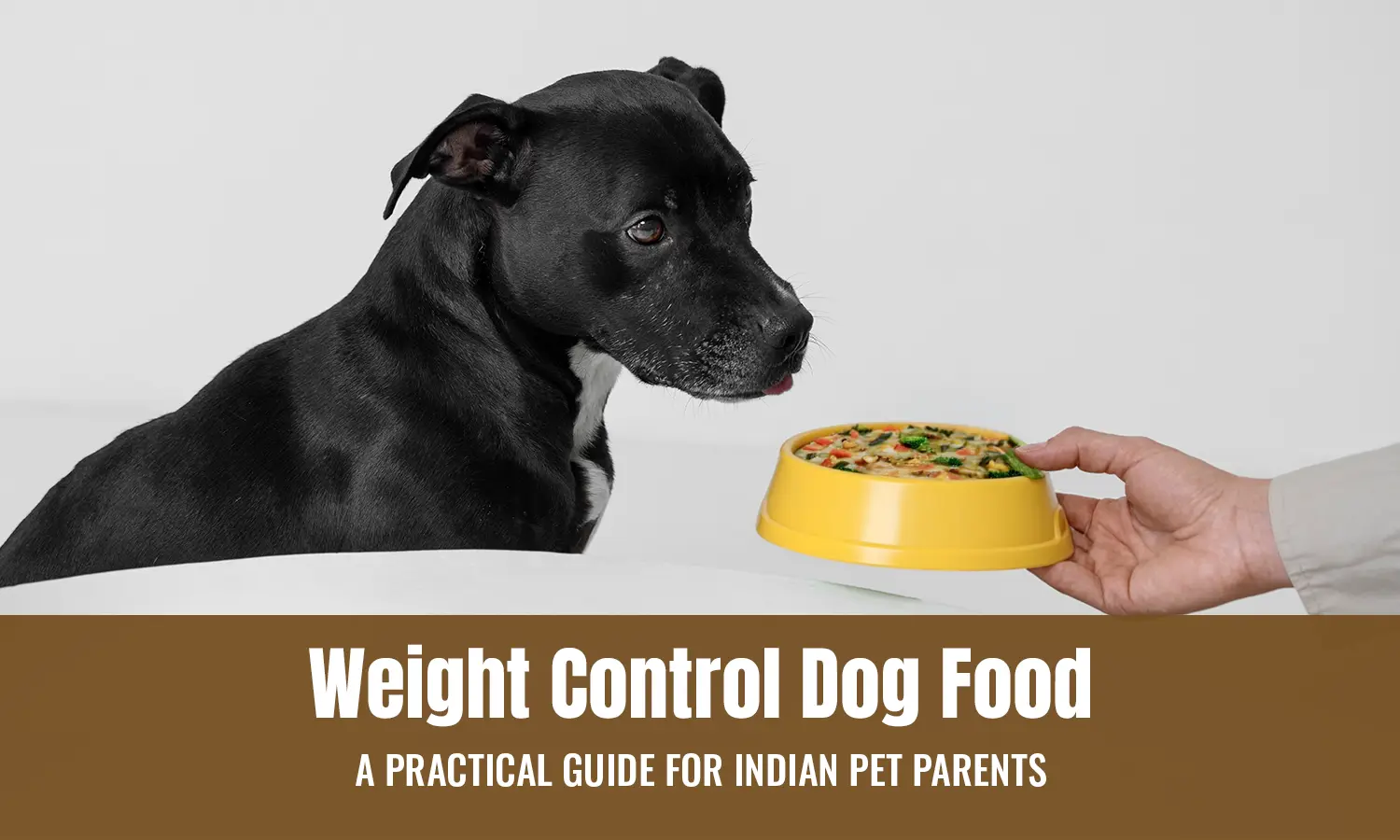
Weight control dog food is formulated to help overweight or inactive dogs maintain a healthy body condition through balanced calories and lean protein. Combined with a proper diet for dogs and regular activity, it supports gradual, sustainable weight loss. Fresh, portion-controlled meals make it easier for pet parents to manage calorie intake accurately, compared to guessing portions from a kibble bag.
Recognising When Your Dog Needs Weight Control
Extra weight on a dog is often mistaken for a sign of good health, when in reality it places strain on joints, the heart and overall mobility. Weight control dog food exists specifically to address this by offering fewer calories per serving while still meeting a dog's nutritional needs. If you can no longer feel your dog's ribs with light pressure, or if your dog tires quickly on walks, it may be time to look closely at what is going into the bowl.
A healthy diet for dogs is not about starving the animal but about matching calorie intake to actual activity levels. Many dogs in Indian households, particularly those living in apartments, get far less exercise than their breed and size would typically require. This makes portion control and food quality even more important.
Why Homemade and Fresh Options Work Well for Weight Management
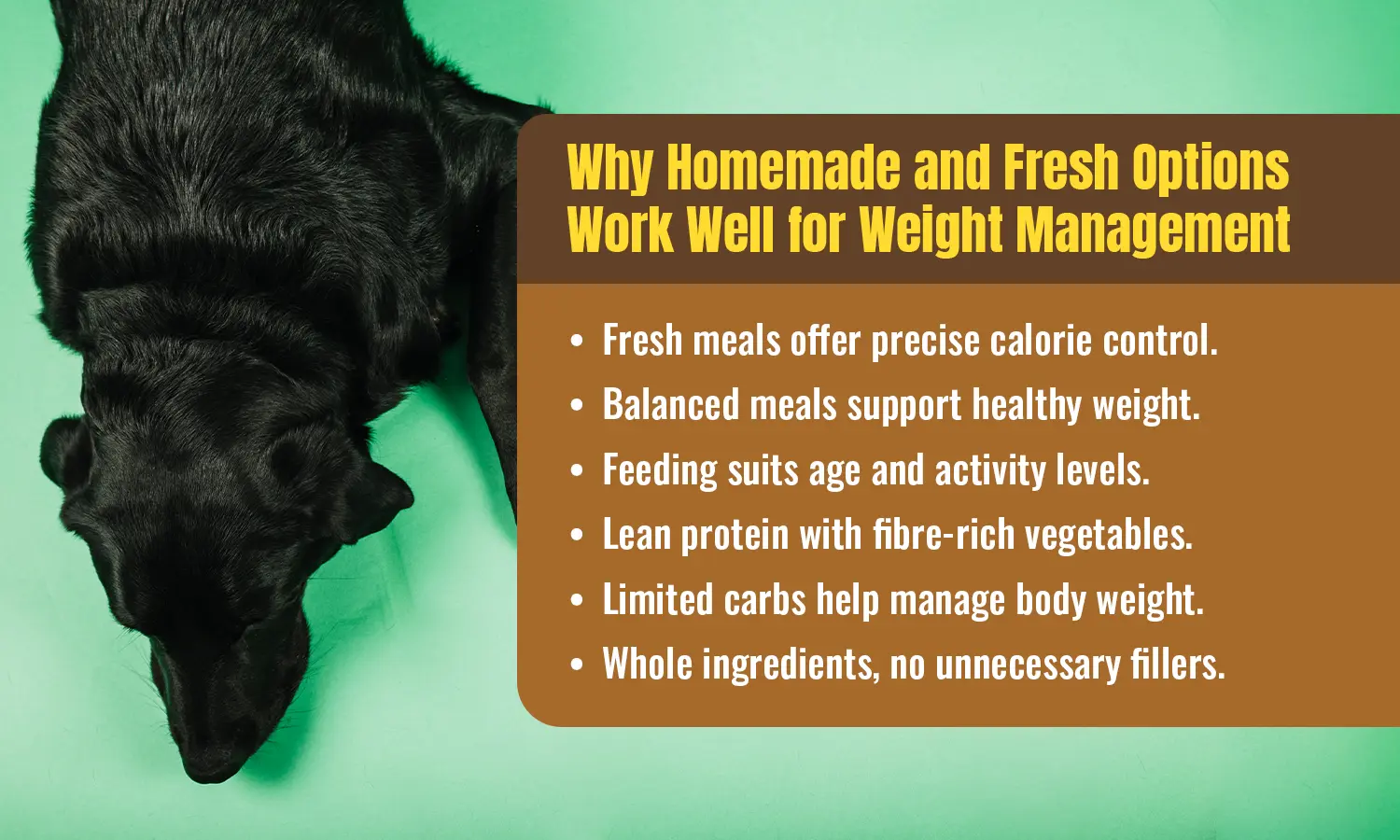
One advantage of fresh, cooked meals over dry kibble is precision. A balanced dog food plan built around lean protein, fiber-rich vegetables and controlled carbohydrates gives pet parents a clearer picture of exactly how many calories their dog consumes each day. Kibble bags list generic feeding guidelines, but these rarely account for an individual dog's activity level, age, or metabolism.
Homemade dog food, healthy for weight management, typically favours lean meats like chicken breast, plenty of vegetables such as pumpkin or beans, and modest amounts of rice or other carbohydrates. This is very close to how Wagg N Dine prepares its meals, using fresh, cooked dog food made with whole ingredients rather than processed fillers that add calories without adding real nutritional value.
Building a Proper Diet Plan for an Overweight Dog
Proper diet for dogs carrying extra weight usually involves a gradual calorie reduction of around ten to twenty percent from maintenance levels, combined with steady portions at consistent times each day. Sudden, drastic cuts can backfire, leaving a dog constantly hungry and prone to begging or scavenging.
Healthy eating for dogs also depends on ingredient quality, not just calorie counting. A dog fed high-fiber vegetables alongside lean protein will feel fuller on fewer calories than a dog fed a carbohydrate-heavy diet of low-quality fillers. This is one reason foods healthy for dogs trying to lose weight should prioritize protein and fiber over starch.
The Role of Fresh, Human-Grade Meals
Human-grade dog food uses the same quality standards applied to food meant for people, which generally means fewer artificial fillers and more identifiable, nutrient-dense ingredients. For a dog on a weight management journey, this distinction matters because every calorie should count toward genuine nutrition rather than empty bulk.
Wagg N Dine's approach reflects this philosophy directly. Fresh pet food made like home meals, delivered on a steady subscription so owners do not have to plan every week, gives pet parents consistent, fresh natural dog food without the daily burden of cooking and portioning by hand. For just ₹3,499 per month, your dog receives two fresh meal packs every day, 750g in the morning and 750g in the evening, totalling 1.5kg of freshly prepared food delivered daily to your home.
Practical Steps for Managing Your Dog's Weight
Start by consulting your vet to rule out any underlying medical causes for weight gain, such as thyroid issues. Once medical causes are excluded, focus on three areas: portion control, ingredient quality and activity levels. Ready to eat dog food with clear portion sizes removes the guesswork of measuring cups and inconsistent scoops, which is often where excess calories creep in unnoticed.
Premium dog food brands, whether dry or fresh, should list their calorie content per serving clearly. This allows pet parents to calculate exactly how much their dog is eating and adjust as needed. If your current food does not disclose this information transparently, that alone is worth questioning.
Consistency Matters More Than Perfection
Dog food delivery services that arrive on a fixed schedule help build consistency, which is one of the most underrated factors in successful weight management. Dogs that eat at predictable times and in predictable portions tend to regulate their appetite better than dogs on irregular feeding schedules. This is especially useful for busy professionals who might otherwise skip a measured feeding in favour of convenience.
Vet-recommended dog food for weight control should also include enough protein to preserve lean muscle mass while calories are reduced. Cutting calories without adequate protein can lead to muscle loss rather than fat loss, which defeats the purpose of the diet in the first place.
Key Takeaways
- Weight control dog food reduces calorie density while preserving essential nutrition and protein.
- A proper diet for dogs focuses on gradual, sustainable calorie reduction rather than sudden restriction.
- Fresh, portion-controlled meals make calorie tracking far more accurate than generic kibble guidelines.
- Human-grade dog food ensures every calorie contributes to real nutrition, not empty filler.
- Consistent feeding schedules support better appetite regulation and steadier weight loss.
Frequently Asked Questions
1. How do I know if my dog needs weight control dog food?
Check your dog's body condition by feeling for the ribs under a thin layer of fat, and look at their waist from above. If the waist is not visible or your dog struggles with normal activity, a vet visit followed by a switch to weight control dog food is a sensible next step.
2. Can homemade meals help with weight loss?
Yes, healthy homemade dog food for weight loss can work well when portions and ingredients are carefully controlled. The main risk with homemade approaches is inconsistency in portion sizes, which is why many pet parents prefer pre-portioned fresh meal subscriptions instead.
3. Is fresh food more effective than diet kibble for weight control?
Fresh food offers better ingredient transparency and often higher protein-to-filler ratios compared to many diet kibble formulas. Fresh meals for dogs also tend to be more satisfying per calorie, which can reduce begging behaviour during a weight loss phase.
4. How long does it take to see results with weight control dog food?
Most dogs show measurable weight change within four to eight weeks of consistent portion control and dietary adjustment. Patience and consistency matter more than speed, since gradual weight loss is safer and more sustainable for a dog's joints and organs.
Want to give your dog a happier, healthier life? Visit Wagg N Dine for more simple, reliable guides on dog food, nutrition, and care.
Ready to switch to fresh, vet-approved meals?
Wagg N Dine cooks human-grade dog food fresh every day and delivers it to your door.
Explore Fresh Meals →