What Is Fresh Dog Food? A Pet Parent's Honest Guide for India
Fresh dog food is transforming canine nutrition in India. Here is what it really means, why it works, and how to choose the right one for your dog.
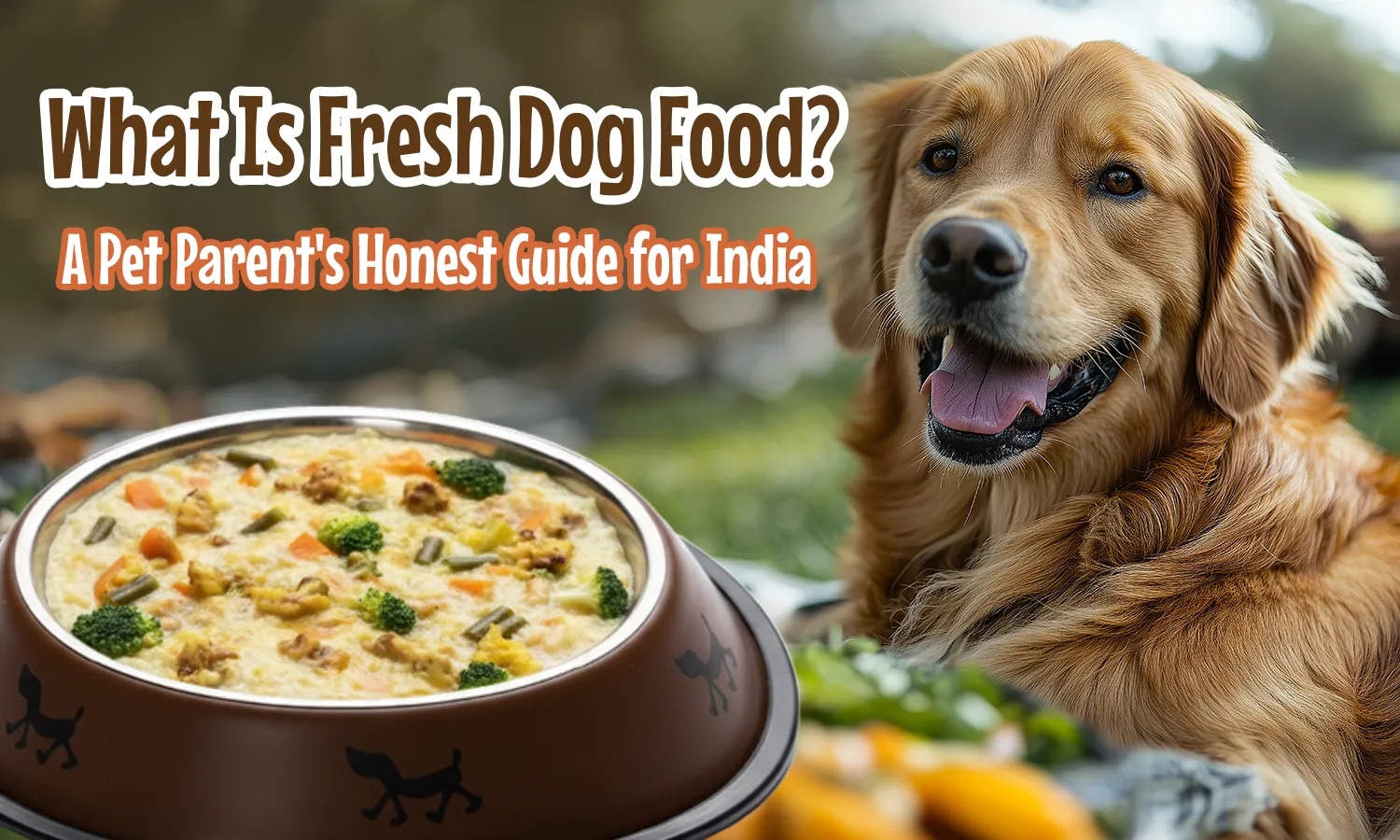
Walk into any Indian pet store today, and you will find shelves crowded with bags claiming to deliver complete, balanced, premium nutrition for your dog. Most of those bags contain kibble, extruded pellets cooked at extreme heat and stabilised for years of shelf life. Increasingly, Indian pet parents are asking a sharper question: if there is something fundamentally better, why are we still feeding our dogs the equivalent of canine cup noodles? The answer, for tens of thousands of households, has become fresh dog food.
Defining Fresh Dog Food
If you ask what is fresh dog food? It is a complete canine diet made from whole, human-grade ingredients, real meat, organs, vegetables, healthy fats, and supplemental nutrients that is gently cooked and refrigerated or frozen rather than processed into shelf-stable pellets. The defining tests are simple. Could you, without flinching, eat a bite of it yourself? Are the ingredients listed by their real names rather than industrial euphemisms like 'meat meal' or 'animal digest'? Was it made within the last few days, not the last two years? If the answer to all three is yes, you are looking at genuine, fresh dog food.
This is not the same as raw food, although the two are sometimes confused. Raw diets are uncooked. Fresh dog food in its most common form is gently cooked at low temperatures, enough to neutralise pathogens, not enough to denature nutrients. It sits in a sweet spot between the convenience of commercial pet food and the loving inadequacy of home-cooked dog meals. The guide below will brief out the Fresh Dog Food Secrets, what to feed and what not to feed.
How Fresh Dog Food Differs From Kibble
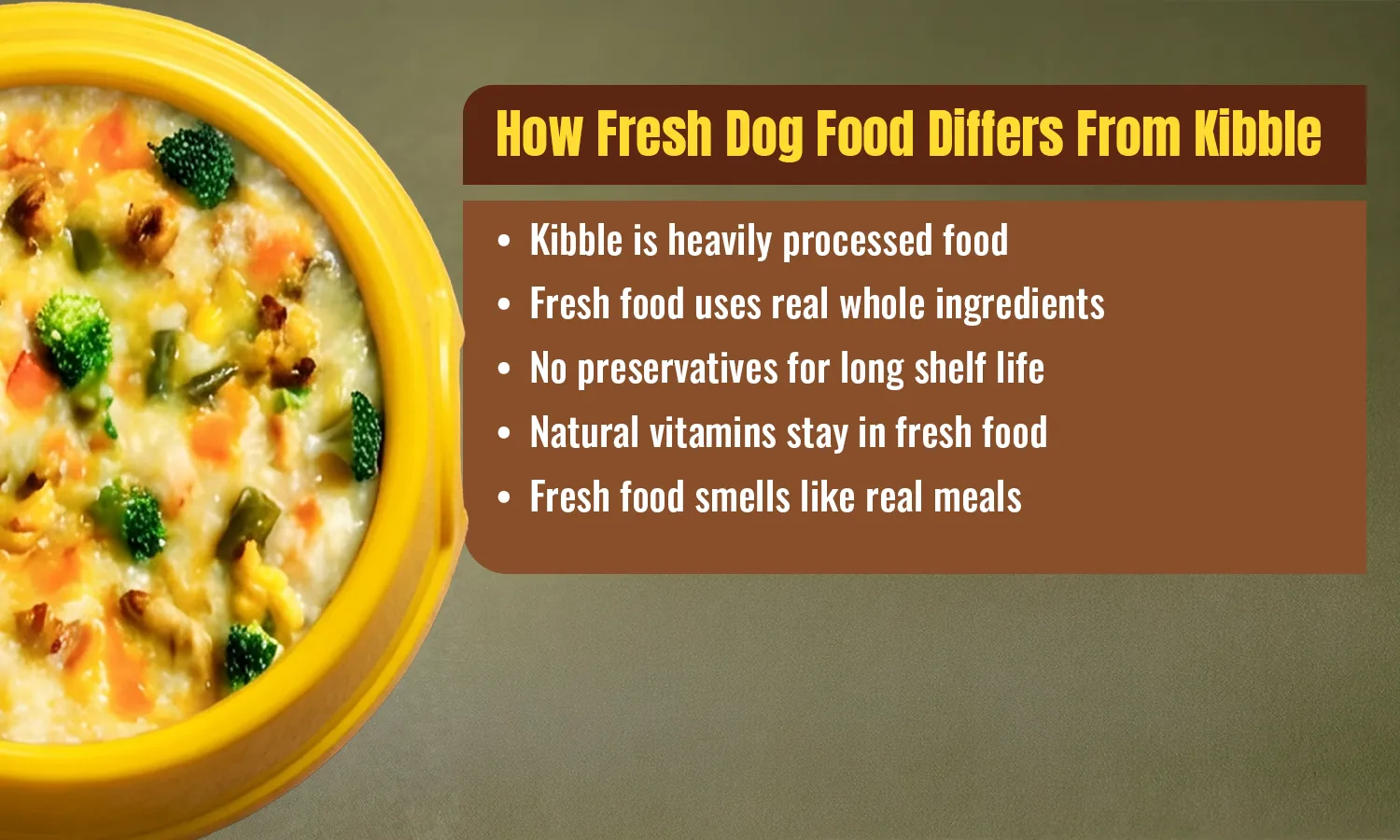
Kibble is, mechanically, an industrial product. Ingredients are ground into a slurry, extruded under pressure at temperatures that often exceed 200°C, dried, and then sprayed with rendered fats and synthetic vitamin premixes to restore palatability and nutrition that the cooking destroyed. Preservatives are added to prevent rancidity. The bag may then sit in a warehouse for months and on a shop shelf for more.
Fresh dog food is the opposite of every step. Whole muscle meat is cooked, not ground into paste. Vegetables are added recognisably. There are no preservatives because the food is meant to be eaten in days, not years. There are no synthetic vitamin sprays because the vitamins are still inside the actual food. The difference, when you put both bowls side by side, is visceral. One smells like food. The other smells like industrial pellets.
Why Indian Dogs Especially Benefit
There is a specific, climate-driven reason fresh dog food is gaining traction faster in India than in many Western markets. Kibble degrades quickly in heat and humidity, and most Indian homes lack the climate-controlled storage that kibble manufacturers assume. Once a kibble bag is opened in Mumbai's monsoon air or Chennai's summer heat, the fats inside begin oxidising within days. The food technically remains 'safe', but its nutritional integrity drops rapidly.
Fresh dog food sidesteps this problem by being delivered in temperature-controlled packaging, in portions sized to be consumed within a short window. The cold chain is built into the model. Indian breeds, particularly the Indie street dog, the Pug, the Labrador, and the Cocker Spaniel, also show high rates of skin allergies and digestive sensitivities on commercial diets, and a switch to fresh dog food often resolves these symptoms within weeks.
What's Inside a Bowl of Quality Fresh Dog Food
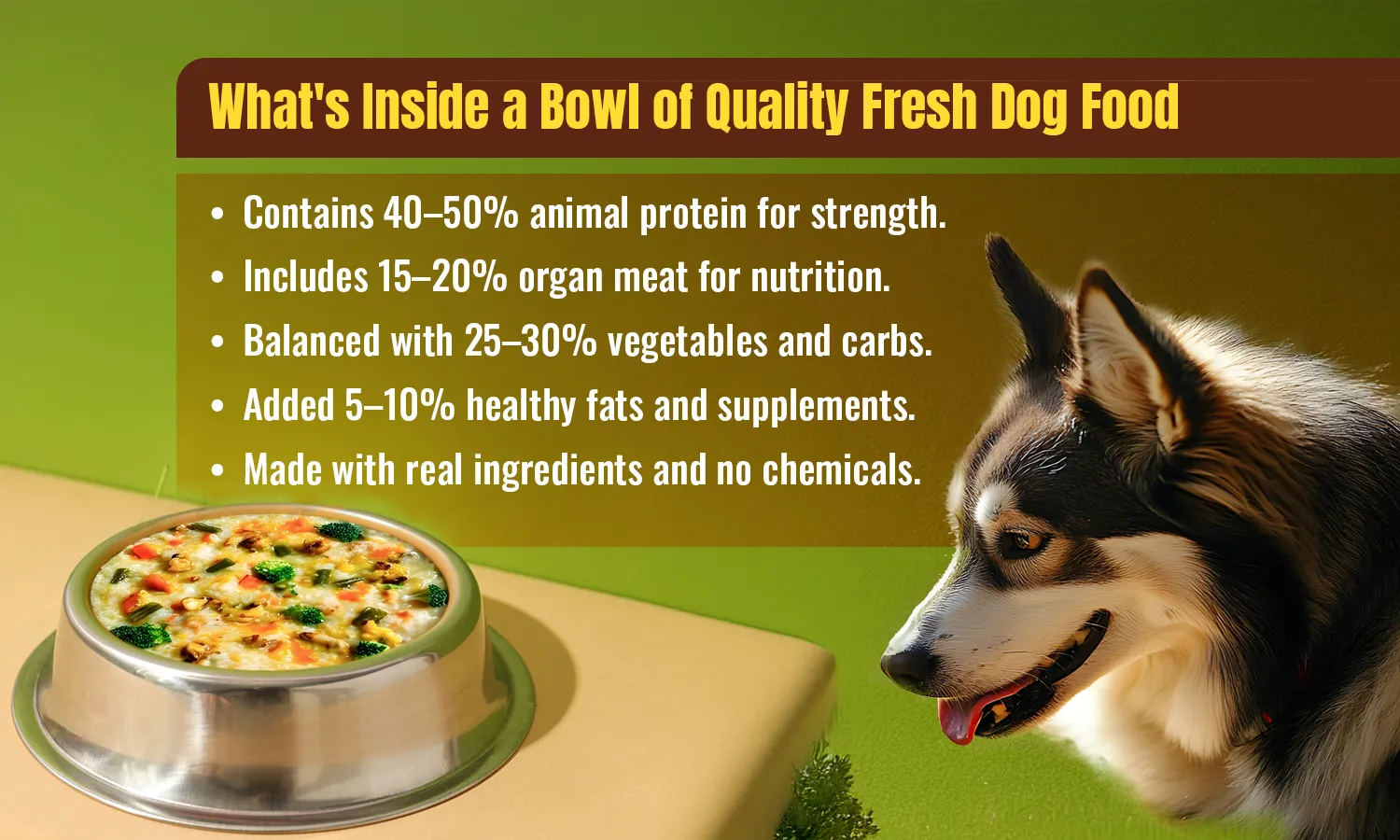
A nutritionally complete fresh dog food bowl follows a recognisable architecture: roughly 40-50% animal protein (chicken, mutton, fish, or paneer for vegetarian formulations), 15-20% organ meat such as liver, 25-30% vegetables and a small amount of low-glycaemic carbohydrate, and 5-10% healthy fats and supplements. This composition is not arbitrary. It is what the canine digestive system evolved to process, validated by modern AAFCO and NRC nutritional standards.
The ingredient list of a good fresh dog food meal reads like a kitchen inventory. Chicken breast. Pumpkin. Spinach. Brown rice. Flaxseed. Turmeric. Apple cider vinegar. Sea salt. There are no acronyms, no synthetic premixes, no things ending in 'oxyquin' or 'butylated'.
Common Misconceptions About Fresh Dog Food
The first misconception is that fresh dog food is nutritionally incomplete. A properly formulated fresh dog food meal designed by a canine nutritionist and tested against AAFCO profiles, is more nutritionally complete than most kibbles, because it does not have to compensate for processing losses with synthetic additives.
The second misconception is that fresh dog food is dangerously rich and will cause weight gain or pancreatitis. The opposite is closer to the truth. Fresh dog food allows precise control of fat content particularly important for dogs prone to pancreatitis or weight gain, in a way that kibble's crude fat percentages cannot match.
The third misconception is that fresh dog food is unaffordable. Per meal, it costs more than supermarket kibble. Per year of dog ownership, once you factor in fewer vet visits, fewer skin treatments, and longer life, the math shifts. Pet parents often discover that the fresh dog food premium is partially or fully offset by reduced healthcare spending.
How Wagg N Dine Approaches Fresh Dog Food
Wagg N Dine is a cloud kitchen built specifically to deliver human-grade meals to Indian dogs on a subscription basis. Every meal is prepared in a regulated kitchen using human-grade ingredients, formulated by canine nutritionists, and packed in portions sized to your dog's breed and weight. Subscriptions come in monthly and annual cadences, with the annual plan offering meaningful savings for pet parents who have already made the switch and want to lock in convenience and price.
Our recipes rotate across chicken, mutton, fish, and vegetarian formulations to provide protein diversity, a quietly important factor in long-term canine health. Fresh dog food, done right, is not just a meal; it is a system designed around your dog's specific biological needs.
Try Fresh Dog Food the Right Way
If you have read this far, your dog has already won. The next step is the easiest one: try a Wagg N Dine starter packand see for yourself what a week of genuine fresh dog food does to your dog's stool quality, coat, energy, and excitement at mealtimes. Honest food, delivered fresh, on your schedule. Your dog will tell you the rest.
Frequently Asked Questions
1. Is fresh food safer for Indian dogs when asking what is fresh dog food?
When exploring what is fresh dog food, you'll find it avoids the rancidity caused by India's humidity, providing a stable, bacteria-controlled diet that thrives in our climate.
2. How do health benefits define what is fresh dog food for long-term care?
A key part of what is fresh dog food is the elimination of industrial "meat meals," which reduces inflammation and leads to smaller stools and fewer veterinary visits.
3. Does the definition of what is fresh dog food include nutritional completeness?
Yes, technically, what is fresh dog food refers to meals that meet AAFCO standards using real muscle meat and organs, ensuring natural vitamin absorption without synthetic sprays.
4. How does what is fresh dog food address a dog's sensitive stomach?
The answer to what is fresh dog food lies in the gentle cooking process, which makes proteins easier to digest and quickly resolves gas caused by heavy kibble processing.
5. For busy parents, what is fresh dog food delivery and how does it help?
To simplify your routine, what is fresh dog food delivery offers pre-portioned, ready-to-serve meals that provide professional-grade nutritional balance without the guesswork of DIY cooking.
Ready to switch to fresh, vet-approved meals?
Wagg N Dine cooks human-grade dog food fresh every day and delivers it to your door.
Explore Fresh Meals →