Dog Food for Small Breeds: A Pocket-Sized Feeding Guide
Dog food for small breeds made simple. How to work out portions, what to look for, puppy tips and Pomeranian and Pug feeding advice.
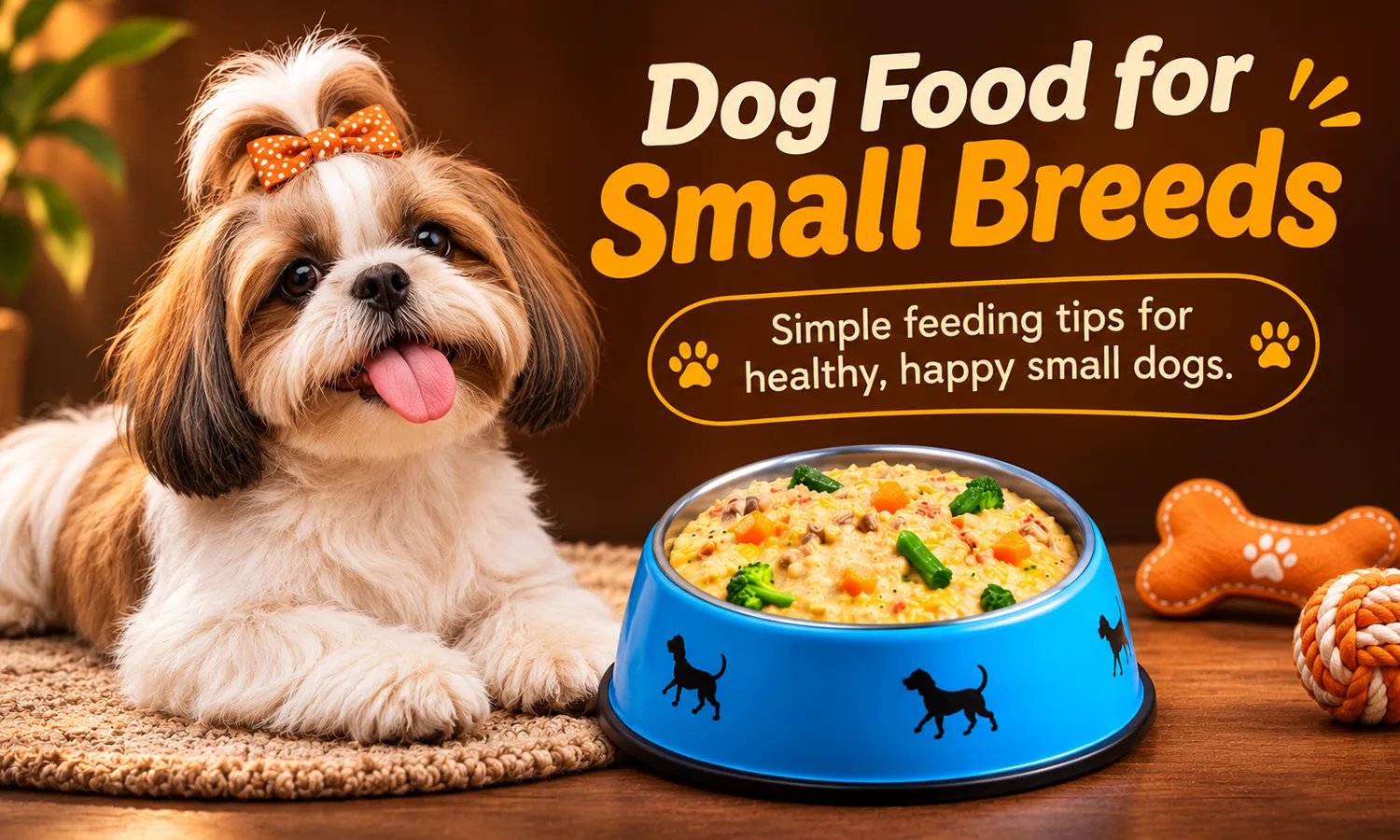
Small dogs often have big opinions about dinner. At Wagg N Dine, we believe choosing dog food for small breeds comes down to three things. The right bite size, a measured portion and a food your dog enjoys. Here is how we suggest you get all three right. Here, a small dog means an adult under about 9 kg.
Quick answer
Small dogs need small bites, measured portions and enough calories for a fast metabolism. Per kilo of body weight, small dogs burn more energy than large dogs, yet their stomachs are tiny, so the bowl must be small, measured and often split into more than one meal.
Small dog feeding chart: bowl maths for a 5 kg dog
A small dog feeding chart is less about one magic number and more about a method. Every small dog is different, so we suggest working it out this way with dog food for small breeds of any kind. Here is the method worked through for a 5 kg adult dog.
| Step | What to do | Example for a 5 kg adult dog |
|---|---|---|
| Weigh your dog | Use a home scale: weigh yourself holding your dog, then subtract your own weight. Repeat monthly | 5 kg |
| Work out daily calories | Resting need is 70 × (body weight in kg)^0.75. Multiply by 1.6 for a neutered adult, 1.8 for an intact adult or 1.0 for weight loss | Resting need is about 234 kcal. Neutered adult about 375 kcal a day, intact adult about 420 kcal, weight loss about 235 kcal |
| Read the feeding guide | Every pack lists a daily amount by body weight. Compare it with the calories per 100 g on the pack | A food with 380 kcal per 100 g gives about 100 g a day |
| Split the amount | Divide the daily total across your dog's meals. Small dogs do well on at least two | 100 g across two meals is about 50 g per meal |
| Count the extras | Treats and table scraps are part of the day too. A common rule is to keep treats under about 10% of daily calories | About 37 kcal, which you take out of the meals |
| Check the waistline | You should feel the ribs easily without seeing them, and see a waist from above | Ribs felt under a light layer, waist visible |
| Adjust to your dog | Activity, age and health change what your dog needs. If weight drifts, change the daily amount in small steps | For example 375 kcal down to about 340 kcal |
These figures are a starting point for a healthy adult, not a rule. Puppies need more per kilo, at about two to three times their resting need while they grow, and the 5 kg dog is only an example. See how to read a dog food label to find the calories on a pack.
Best dog food for small breeds: what to look for
The best dog food for small breeds is one your dog can chew easily and eat happily. Here is what we look at first in any dog food for small breeds.
| Feature | Why it matters |
|---|---|
| Small bite size | Tiny mouths manage small pieces better |
| Clear ingredient list | You know exactly what goes in the bowl |
| A named protein | You can see what your dog is eating |
| Easy to portion | Small dogs gain weight quickly from extras |
| A taste your dog likes | Small dogs can be fussy eaters |
See also the best dog food in India.
Small breed puppy food: the first 12 months
Small breed puppy food should be made for growing puppies, so check the pack says it suits puppies. Puppies usually eat smaller meals more often than adult dogs. Aim for at least three small meals a day for puppies under four months, and three to four for toy breeds. Puppies under about three months, especially tiny breeds, can lose blood sugar if they go too long without eating, so avoid long gaps.
Small breeds finish growing sooner than large ones. Puppy food usually continues until about 8 to 10 months for small dogs and 6 to 9 months for toy dogs, and then you can move to adult dog food for small breeds. Make any food change slowly over several days to keep a young tummy settled. See puppy nutrition 101 for the full first year.
Dog food for Pomeranian: coat, weight and tiny appetites
Good dog food for Pomeranian owners starts with small portions served on time. Poms are tiny, so a few extra treats a day make a real difference to their weight. A dull coat has many causes, so check grooming, portions and variety before you change foods. For small treats, see our healthy dog treats guide.
Dog food for Pug: feeding a breed that loves food too much
Dog food for Pug owners is mostly about portion control. Pugs love their food and gain weight easily. Measure every meal, keep treats small and check the waistline often. Extra weight is hard on a Pug, so get veterinary advice if your Pug struggles to breathe during walks or play. Choosing dog food for small breeds with a clear feeding guide makes measuring simple. For weight-conscious options, read about weight control dog food and low fat dog food.
Dog food for toy breeds: tiny dogs, big needs
Dog food for toy breeds needs the smallest bite size of all. Toy dogs have very small stomachs, so they often do better on smaller meals spread through the day. Weigh your toy dog often, because a gain of a few hundred grams is a big change for a dog of 2 or 3 kg.
Small kibble dog food: mouth size, teeth and chewing
Small kibble dog food is easier for small jaws to pick up and chew. If your dog swallows pieces whole or leaves them in the bowl, the size may be wrong. Softer food is another option for dogs that find dry pieces hard, and cooked rice, vegetables and chicken are soft by nature. This is one reason some families choose fresh food for their small dogs. To compare the two styles, read wet vs dry dog food and fresh dog food vs kibble.
Small breed dog food India: heat, storage and what is easy to find
Small breed dog food India shoppers deal with heat and humidity. Keep dry food sealed in a cool cupboard. Store fresh food in the fridge and serve it within the time the maker advises. Throw away anything your dog leaves out in the heat. At Wagg N Dine we deliver daily in Chennai, so a fresh meal reaches you without long storage at home.
Four small-dog food problems and the fix
Here are four common small dog food problems and how to handle them.
| Problem | What you see | The fix |
|---|---|---|
| The greedy eater | Gulps food too fast | Try smaller portions served more often |
| The picky eater | Walks away from the bowl | Keep meal times fixed and lift the bowl after about 15 to 20 minutes. If appetite drops suddenly, get veterinary advice |
| Sensitive teeth | Chews slowly or drops food | Softer food can help, and a gentle check of the mouth will show if something looks wrong |
| Creeping weight | Weight rises through treats | Measure everything that goes in |
For tummy trouble, read dog food for sensitive stomachs.
Key Takeaways
- Dog food for small breeds should come in small bites and measured portions.
- Use the pack's feeding guide and the calorie method above to set daily amounts.
- Puppies need food made for growing puppies, fed in small, frequent meals.
- Pugs and Pomeranians gain weight easily, so count every treat.
- Change food slowly over several days.
Frequently asked questions
1. How often should small dogs eat?
Many small dogs do well on more than one meal a day. Adults need at least two meals, and young puppies need three or four small ones.
2. How much should a 5 kg dog eat a day?
A healthy neutered adult of 5 kg needs about 375 kcal a day, and an intact adult about 420 kcal. How many grams that is depends on the calories in your food, so check the pack.
3. Is wet food good for small dogs?
Many small dogs enjoy wet or fresh food because it is soft and easy to chew. Fresh food still needs measured portions.
4. Do small dogs need special food?
They need dog food for small breeds with a bite size they can manage and portions that match their size.
5. Which dog food is better for small dogs?
The best dog food for small breeds is one your dog eats happily, chews easily and stays at a healthy weight on.
6. How to introduce puppy to new food?
Mix a little new food into the old food and increase it slowly over several days. Watch the stool and appetite as you go.
7. Can I give ghee to my puppy?
We suggest skipping it. Ghee is very rich in fat, and fatty foods can upset a puppy's stomach and, in some dogs, cause pancreatitis.
Why choose Wagg N Dine for small dogs
If you want fresh food for your small dog without cooking every day, Wagg N Dine can help. Wagg N Dine is a Chennai cloud kitchen founded by Manivannan, who began cooking homemade meals for his own dog and moved away from kibble. The meals are fresh, human-grade and prepared daily in a dedicated kitchen using fresh chicken, RO water and sourced ingredients. The menu is a fresh cooked chicken, vegetables and rice meal, delivered to your door in Chennai, with subscription plans to suit your routine. Read what is fresh dog food and fresh dog food delivery in India, then see how your small dog takes to it first.
Ready to switch to fresh, vet-approved meals?
Wagg N Dine cooks human-grade dog food fresh every day and delivers it to your door.
Explore Fresh Meals →